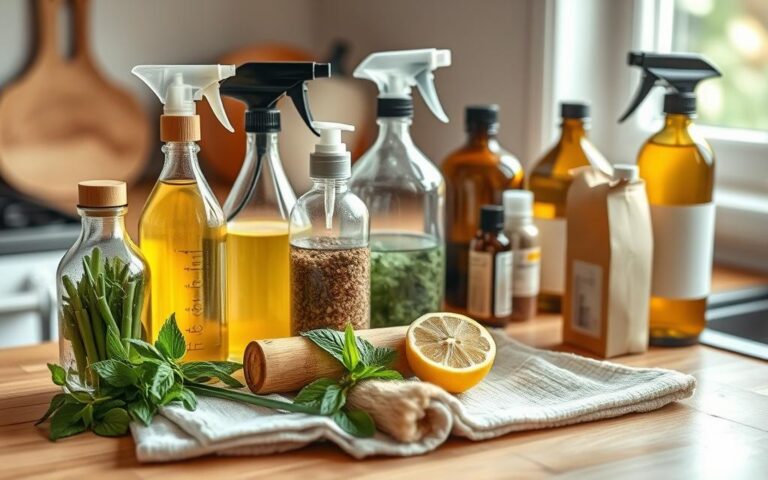

The average American household contains over 62 toxic chemicals. Many hide in everyday cleaning supplies. These substances can trigger allergies, irritate skin, and contribute to indoor air pollution.
The solution lies in a surprisingly simple alternative. It costs just pennies per batch.
Creating homemade cleaning products transforms ordinary pantry staples into powerful solutions. Vinegar, baking soda, and essential oils become effective tools that tackle grime. These natural alternatives work just as well as store-bought options.
This guide reveals practical recipes for DIY cleaners tailored to specific needs. Discover formulas for all-purpose sprays, kitchen degreasers, and bathroom disinfectants. Find solutions for floors and laundry boosters too.
Each recipe uses accessible ingredients and takes minutes to prepare. The transition to natural household care becomes effortless with these tested formulations.
Key Takeaways
- Average households contain over 62 toxic chemicals in commercial cleaning supplies
- DIY natural cleaners cost significantly less than store-bought alternatives
- Simple pantry ingredients like vinegar and baking soda create effective solutions
- Recipes are available for every room including kitchens, bathrooms, and laundry areas
- Natural alternatives protect family health while reducing environmental impact
- Most recipes require only minutes to prepare with accessible ingredients
Introduction to Homemade Cleaning Products
Many homeowners are discovering the power of simple ingredients to tackle everyday cleaning challenges. The shift toward creating cleaners at home reflects a broader awareness of what families bring into their living spaces. This growing trend has reshaped how people think about maintaining clean, healthy homes.
The appeal of natural cleaning solutions stems from concerns about harsh chemicals found in conventional products. Studies show that indoor air quality can be significantly affected by commercial cleaners containing volatile organic compounds. Families with young children, pets, or members with respiratory sensitivities are particularly motivated to seek safer alternatives.
Homemade cleaning products offer a straightforward approach to household maintenance using ingredients already found in most kitchens. Items like vinegar, baking soda, lemon juice, and salt form the foundation of effective DIY cleaners. These simple components work through natural chemical reactions that break down dirt, dissolve grease, and eliminate odors.

The philosophy behind making cleaners at home centers on transparency and control. Someone mixing their own solutions knows exactly what goes into each bottle. There are no hidden ingredients, no mysterious chemical names, and no concerns about proprietary formulas that manufacturers keep secret.
One common misconception suggests that natural cleaning solutions lack the strength to handle tough messes. Research and countless testimonials prove otherwise. A paste of baking soda and water can scrub away baked-on food as effectively as commercial abrasives.
White vinegar cuts through soap scum and mineral deposits with remarkable efficiency. While some homemade cleaning products work best when used fresh, many recipes remain potent for weeks or months. The key lies in understanding which ingredients have natural preservative properties and which combinations require more frequent preparation.
The economic advantages of homemade cleaning products cannot be overlooked. A gallon of white vinegar costs a fraction of what specialized commercial cleaners demand. Families can produce multiple bottles of effective cleaners for less than the price of a single brand-name product.
This cost savings adds up significantly over time, especially for households that maintain regular cleaning schedules. Creating cleaners at home fits naturally into the broader movement toward sustainable living and environmental consciousness. This approach reduces plastic waste from purchasing multiple specialized products.
It minimizes the environmental impact of manufacturing, packaging, and transporting commercial cleaners across the country. The green living philosophy extends beyond just environmental benefits. It encompasses a desire to reduce chemical exposure, support healthier indoor environments, and make conscious choices.
Making homemade cleaning products represents a tangible step toward these goals. Safety considerations make natural cleaning solutions particularly appealing for homes with pets and children. Commercial cleaners often require rooms to be ventilated and surfaces to be rinsed thoroughly after use.
DIY alternatives typically use food-grade ingredients that pose minimal risk if accidentally ingested in small amounts. These natural cleaners are safer if touched by curious hands or paws.
| Feature | Commercial Cleaners | Homemade Cleaners |
|---|---|---|
| Ingredient Transparency | Limited disclosure, proprietary formulas | Complete knowledge of every component |
| Cost Per Bottle | $4-$12 depending on brand and specialty | $0.50-$2 for equivalent volume |
| Environmental Impact | Plastic packaging, chemical runoff concerns | Reusable containers, biodegradable ingredients |
| Health Considerations | May contain allergens, irritants, VOCs | Generally non-toxic, minimal respiratory impact |
The effectiveness of homemade cleaning products has been validated through both scientific principles and practical experience. Vinegar’s acidity dissolves mineral deposits and kills many bacteria strains. Baking soda’s mild alkalinity and gentle abrasive properties make it ideal for scrubbing without scratching.
These aren’t folk remedies—they’re chemistry in action using safe, proven compounds. Understanding the basics of how these natural ingredients work prepares homeowners to create solutions tailored to their specific needs. Different surfaces and types of dirt respond to different pH levels and cleaning actions.
The recipes that follow in subsequent sections build on this foundation, offering targeted solutions for every room and cleaning challenge. The journey toward making natural cleaning solutions begins with recognizing that effective cleaning doesn’t require complicated formulas. It starts in the pantry, with ingredients that generations have trusted long before commercial cleaning products dominated store shelves.
This return to simpler methods reflects both wisdom from the past and innovation for a healthier future.
Benefits of Using Homemade Cleaning Products
The shift toward eco-friendly cleaning supplies represents more than a trend—it’s a practical choice with real benefits. Families who make their own cleaners discover advantages that affect their health, finances, and the environment.
Understanding why homemade cleaners work better for homes and the planet helps people make informed decisions. The advantages span multiple areas of daily life. Each benefit builds on the others to create a healthier, more sustainable household.
Environmental Advantages
Creating cleaning solutions at home significantly reduces plastic waste that fills landfills and oceans. Commercial cleaners come in single-use plastic bottles that contribute to environmental pollution. Homemade versions allow families to reuse the same containers repeatedly, cutting down on plastic consumption by hundreds of bottles per year.
Green cleaning alternatives prevent harmful chemicals from entering waterways and ecosystems. Conventional cleaners carry phosphates, chlorine, and synthetic surfactants into rivers and lakes. These substances damage aquatic life and disrupt natural water systems.
The carbon footprint from manufacturing and transporting commercial cleaning products creates unnecessary environmental strain. Factory production requires energy-intensive processes, while shipping heavy liquid products across the country burns fossil fuels. Making cleaners at home eliminates these transportation emissions entirely.
Sustainable living practices become easier when households choose natural cleaning methods. DIY cleaners support broader environmental conservation efforts. Small changes in daily routines can create meaningful positive impacts on the planet.
Healthier Home Environment
Homemade cleaners eliminate exposure to toxic chemicals found in conventional products. Many commercial cleaners contain ingredients linked to respiratory problems, skin irritation, and long-term health concerns. Natural alternatives use simple ingredients that pose no health risks to family members.
Volatile organic compounds (VOCs) released by commercial cleaners contribute to poor indoor air quality. These chemicals evaporate into the air during and after cleaning, causing headaches, dizziness, and breathing difficulties. Natural ingredients like vinegar and baking soda produce zero VOCs, keeping indoor air fresh and clean.
Synthetic fragrances in store-bought products trigger allergies and asthma attacks in sensitive individuals. Chemical perfumes contain dozens of undisclosed ingredients that irritate airways and skin. Homemade cleaners either have no scent or use pure essential oils that provide pleasant aromas without health risks.
Households with children and pets benefit especially from non-toxic cleaning solutions. Young children frequently touch surfaces and put hands in their mouths, increasing their exposure to chemical residues. Pets walk on cleaned floors and then lick their paws, ingesting whatever chemicals remain behind.
People with chemical sensitivities find relief when switching to homemade alternatives. Those who experience reactions to conventional cleaners can use natural ingredients without worry. This creates a more comfortable living environment for everyone in the household.
Cost-Effective Solutions
Making cleaning products at home dramatically reduces household expenses compared to purchasing commercial brands. Basic ingredients cost a fraction of specialized cleaners while delivering comparable or better results. The financial savings accumulate quickly over months and years.
A comparison of typical costs reveals the significant difference:
| Cleaner Type | Commercial Product Cost | Homemade Version Cost | Annual Savings |
|---|---|---|---|
| All-Purpose Cleaner | $4.50 per bottle | $0.35 per batch | $49.80 |
| Glass Cleaner | $3.75 per bottle | $0.25 per batch | $42.00 |
| Bathroom Cleaner | $5.25 per bottle | $0.45 per batch | $57.60 |
| Floor Cleaner | $6.00 per bottle | $0.50 per batch | $66.00 |
These savings assume typical household usage of one bottle per month for each cleaner type. Families can save over $200 annually by making these four basic cleaners at home instead of buying commercial versions.
A few multi-purpose ingredients replace numerous specialized commercial products. Vinegar, baking soda, castile soap, and hydrogen peroxide handle most household cleaning tasks. This simplifies shopping trips and reduces storage space needed for cleaning supplies.
Bulk purchasing of basic ingredients increases savings even further. A large container of white vinegar lasts for months and costs less than two bottles of commercial cleaner. The same principle applies to baking soda, which serves multiple cleaning purposes throughout the home.
The financial benefits extend beyond direct product costs. Fewer shopping trips save time and transportation expenses. Reduced plastic waste means lower trash disposal needs in some municipalities that charge by volume.
Essential Ingredients for DIY Cleaners
Making homemade cleaners needs only a few pantry staples and natural items. These ingredients create powerful cleaning solutions that match store-bought products. Knowing what each part does helps you make effective DIY cleaning recipes for your needs.
Natural cleaning is beautifully simple. Most homes already have key ingredients that handle different cleaning tasks. These items blend science with practical use to work without harsh chemicals.
Common Ingredients Found in Kitchens
White vinegar is the foundation of most DIY cleaning recipes. Its acetic acid cuts through mineral deposits, soap scum, and grease easily. The acid breaks down dirt particles so you can wipe them away.
Baking soda offers gentle scrubbing power that won’t scratch surfaces. This compound removes odors while providing mild scouring action. Mixed with vinegar, it fizzes and loosens tough grime.
Lemon juice brings natural acid and fresh scent to homemade solutions. Its citric acid works like vinegar but smells better. Lemon peels contain limonene, which cuts through grease.
Salt works as an excellent abrasive agent for tough stains and baked-on food. It soaks up moisture and helps liquid cleaners last longer. Combined with other items, salt boosts cleaning power.
Castile soap creates a plant-based foundation for many recipes. This soap cuts grease and lifts dirt from surfaces. It makes suds without fake detergents, perfect for sensitive homes.
| Ingredient | Primary Property | Best Uses | pH Level |
|---|---|---|---|
| White Vinegar | Acidic dissolving agent | Mineral deposits, glass, disinfecting | 2.5 |
| Baking Soda | Mild abrasive and deodorizer | Scrubbing, odor absorption, stain removal | 9.0 |
| Lemon Juice | Natural acid and degreaser | Cutting boards, copper, stainless steel | 2.0 |
| Castile Soap | Plant-based surfactant | General cleaning, dishes, floors | 8.9 |
Natural Oils and Their Benefits
Essential oils turn basic DIY cleaning recipes into germ-fighting solutions. These plant extracts offer cleaning benefits and nice scents. Each oil brings special properties that boost homemade cleaners.
Tea tree oil contains strong compounds that fight bacteria, viruses, and mold. Studies show it kills common household germs. Just a few drops add serious germ-fighting power.
Lavender oil provides gentle bacteria-fighting properties and creates a calm feeling. Its nice smell covers up vinegar’s sharp odor. This oil works great in bedroom and bathroom cleaners.
Lemon essential oil delivers stronger cleaning power than fresh lemon juice. Its high limonene content cuts grease and makes surfaces shine. The bright citrus smell energizes cleaning and freshens spaces.
Eucalyptus oil offers powerful deodorizing and antimicrobial benefits for tough jobs. It works especially well in bathroom cleaners and floor solutions. The refreshing scent clears the air while you clean.
“Nature provides everything we need for a clean home. The ingredients in our kitchens hold more cleaning power than most people realize.”
Safety Precautions When Mixing Cleaners
Creating safe DIY cleaning recipes means knowing which mixes to avoid. Some ingredients make dangerous reactions when combined. Understanding these interactions keeps you and your family safe.
Never mix vinegar with hydrogen peroxide in one container. This creates peracetic acid, which irritates eyes, skin, and breathing. Use these ingredients separately for best safety and results.
Avoid mixing bleach with ammonia or acids like vinegar. These combos release toxic chlorine gas that hurts your lungs. Even though natural cleaning skips bleach, knowing this danger matters.
Always work in well-aired spaces when mixing and using cleaners. Open windows and turn on fans for good air flow. Fresh air prevents fume buildup, even from natural items.
Store homemade cleaners in clearly labeled glass containers away from kids and pets. Glass stops chemical reactions with plastic and keeps products fresh. Labels should show ingredients, mixing date, and purpose.
Test new cleaning recipes on small, hidden spots before full use. Different surfaces react differently to various ingredients. This step prevents damage to valuable items or finishes.
- Keep essential oils away from pets, especially cats who cannot metabolize certain compounds
- Wear gloves when handling concentrated solutions or cleaning for extended periods
- Never transfer cleaners to unmarked bottles or food containers
- Dispose of expired or ineffective mixtures properly according to local guidelines
- Research ingredient interactions before creating new recipe combinations
Smart handling keeps DIY cleaning recipes safe alternatives to store products. These steps create a secure space while maintaining cleaning power. With proper knowledge, anyone can confidently make and use homemade cleaners.
Homemade All-Purpose Cleaner Recipes
Three fundamental cleaning formulas provide the cornerstone for maintaining a spotless home without harsh chemicals. These natural cleaning solutions work effectively on multiple surfaces throughout every room. Each recipe uses affordable ingredients that most households already have on hand.
Building a collection of versatile cleaners starts with understanding how basic ingredients perform different cleaning tasks. Homeowners can customize each formula based on specific needs and preferences.
Simple Vinegar-Based Cleaner
White vinegar creates one of the most effective and economical homemade cleaners available. The acidic nature of vinegar breaks down dirt, grease, and mineral deposits on most surfaces. This basic recipe requires only two ingredients and takes less than a minute to prepare.
The standard mixing ratio combines equal parts white vinegar and water in a spray bottle. For general cleaning, this 1:1 proportion works perfectly on countertops, appliances, and windows. Those sensitive to vinegar’s smell can adjust the ratio to 1 part vinegar with 2 parts water.
Application methods vary depending on the surface being cleaned. Users should spray the solution directly onto the surface and wipe with a clean microfiber cloth. For stubborn stains, allow the cleaner to sit for 3-5 minutes before wiping.
Important safety note: Avoid using vinegar-based cleaners on natural stone surfaces like marble or granite. The acid can etch and damage these materials over time. Never use vinegar on hardwood floors unless heavily diluted, as it may dull the finish.
Citrus-Infused Cleaning Solution
Citrus peels transform ordinary vinegar into a powerful degreaser with a fresh, pleasant scent. This natural cleaning solution combines waste reduction with enhanced cleaning capabilities. The oils from citrus rinds add natural degreasing properties while masking vinegar’s sharp odor.
Creating citrus-infused vinegar requires patience but delivers exceptional results. Homeowners should fill a glass jar with citrus peels from lemons, oranges, or grapefruits. Pour white vinegar over the peels until completely covered, seal the jar, and store in a cool place.
The steeping process takes 2-4 weeks for optimal infusion. Shaking the jar every few days helps release more oils from the peels. After steeping, strain the liquid through a fine-mesh sieve or cheesecloth to remove all solid pieces.
Dilution ratios depend on the cleaning task at hand. Mix 1 part citrus vinegar with 1 part water for general cleaning purposes. For heavy degreasing in kitchens, use the citrus vinegar undiluted on tough spots before wiping clean.
Baking Soda as a Cleaning Agent
Baking soda serves as a gentle abrasive that scrubs without scratching delicate surfaces. Its alkaline properties neutralize odors while lifting stubborn stains. This versatile ingredient works alone or combines with other natural cleaning solutions for enhanced power.
Creating a basic baking soda paste requires mixing 3 parts baking soda with 1 part water. Stir until the mixture reaches a thick, spreadable consistency similar to toothpaste. This paste excels at cleaning sinks, tubs, tile grout, and stovetops.
Apply the paste directly to the stained area using a damp sponge or cloth. Scrub gently in circular motions, then rinse thoroughly with clean water.
Combining baking soda with other ingredients creates powerful cleaning boosters. Mix 2 tablespoons of baking soda with 1 cup of water and 10 drops of essential oil. For drain cleaning, pour 1/2 cup baking soda followed by 1 cup vinegar down the drain.
| Cleaner Type | Primary Ingredients | Best Uses | Preparation Time | Shelf Life |
|---|---|---|---|---|
| Vinegar-Based Cleaner | White vinegar, water (1:1 ratio) | Countertops, windows, appliances, bathroom fixtures | 1 minute | Indefinite when stored properly |
| Citrus-Infused Solution | Citrus peels, white vinegar, water | Kitchen grease, sticky residue, general cleaning with fresh scent | 2-4 weeks infusion | 6 months in sealed container |
| Baking Soda Paste | Baking soda, water (3:1 ratio) | Scrubbing sinks, tubs, tile grout, removing stubborn stains | 2 minutes | Make fresh for each use |
Storage methods ensure these homemade cleaners maintain their effectiveness over time. Keep vinegar-based solutions in glass or plastic spray bottles away from direct sunlight. Label each container with the contents and creation date for easy identification.
Baking soda paste works best when mixed fresh for each cleaning session. Store dry baking soda in an airtight container to prevent moisture absorption. The citrus-infused vinegar retains potency for up to six months when sealed properly.
These recipes provide the foundation for eco-friendly cleaning throughout the home. Users can adjust ingredient ratios based on cleaning intensity needs. Experimenting with different combinations helps households discover their preferred natural cleaning solutions.
DIY Kitchen Cleaners
Creating effective DIY kitchen cleaners keeps food preparation areas free from grime and harmful chemicals. The kitchen needs special attention because surfaces directly contact food. Non-toxic household cleaners are the safest choice for families.
Homemade solutions offer powerful cleaning action without leaving chemical residues that could contaminate meals. These recipes use simple ingredients that work together effectively. Natural cleaning solutions handle every kitchen task from stubborn grease to bacteria concerns.
Powerful Degreaser for Stubborn Stains
Baked-on grease and oil splatters require a specialized formula that cuts through tough residues. This degreaser combines ingredients with natural grease-dissolving properties. The recipe delivers professional-strength cleaning without harsh chemicals.
To create this powerful degreaser, combine the following ingredients in a spray bottle:
- 2 cups warm water
- 1/4 cup liquid castile soap
- 2 tablespoons washing soda
- 1 tablespoon white vinegar
- 10 drops lemon essential oil
- 5 drops tea tree essential oil
The washing soda provides alkaline cleaning power that breaks down fatty acids in grease. Castile soap acts as a surfactant, allowing water to penetrate oily surfaces. Essential oils add antimicrobial properties while contributing a fresh scent.
Application technique matters significantly for maximum effectiveness. Spray the solution generously on greasy surfaces. Allow it to sit for 5-10 minutes before wiping.
This contact time lets the ingredients penetrate and dissolve stubborn buildup. For particularly tough stains, apply the solution and cover with a damp cloth. This prevents evaporation.
Use a scrub brush or textured sponge for heavily soiled areas. The mechanical action combined with the chemical cleaning power removes challenging grease deposits. Rinse surfaces thoroughly with clean water after cleaning.
Gentle Yet Effective Dish Soap
Commercial dish detergents often contain synthetic fragrances and harsh surfactants that irritate skin. A natural dish soap recipe provides a gentler alternative while maintaining grease-cutting effectiveness. This formula works well for hand-washing dishes and general kitchen cleaning tasks.
Mix these ingredients in a dispenser bottle for easy use:
- 1 cup liquid castile soap
- 1/4 cup distilled water
- 1 tablespoon vegetable glycerin
- 1 tablespoon washing soda
- 15 drops citrus essential oil (orange or lemon)
The vegetable glycerin serves multiple purposes in this formulation. It moisturizes hands during washing and helps the soap adhere to dishes. The washing soda boosts grease-cutting power significantly.
Homemade dish soap produces fewer suds than commercial products. It lacks synthetic foaming agents. Less foam doesn’t mean less cleaning power—the solution effectively removes grease and food residues.
For hand-washing dishes, use approximately one tablespoon of soap in hot water. The solution cuts through grease while remaining gentle on hands. For individual dish washing, apply a small amount directly to a sponge.
| Washing Method | Amount Needed | Best Use |
|---|---|---|
| Full Sink Basin | 1-2 tablespoons | Large dish loads |
| Direct Application | 1/2 teaspoon | Individual items |
| Spot Cleaning | Few drops | Quick wipe-downs |
Food-Safe Surface Sanitizer
Countertops and sinks require regular sanitization to prevent bacterial growth. This sanitizer uses ingredients with natural antimicrobial properties to disinfect surfaces safely. The formula kills common kitchen bacteria without leaving toxic residues.
The base sanitizer recipe includes these components:
- 1 cup distilled water
- 1 cup white vinegar
- 20 drops tea tree essential oil
- 10 drops thyme essential oil
- 10 drops eucalyptus essential oil
White vinegar contains acetic acid, which demonstrates antimicrobial activity against many common pathogens. The essential oils enhance sanitizing power through their natural antibacterial compounds. Tea tree oil particularly shows strong effectiveness against foodborne bacteria.
Proper contact time ensures effective sanitization. After spraying surfaces thoroughly, allow the solution to remain on the surface for at least 5 minutes. This duration gives the antimicrobial ingredients sufficient time to work.
For heavily soiled surfaces, clean with soap and water first. Then apply the sanitizer.
Different countertop materials require specific considerations for safe cleaning. Granite counters tolerate vinegar-based cleaners well when properly sealed. Laminate surfaces also respond well to this formula without damage concerns.
For butcher block and other wood surfaces, reduce the vinegar concentration to prevent drying. Use a 2:1 water-to-vinegar ratio instead. Increase the essential oil content to maintain antimicrobial effectiveness.
Apply sparingly and wipe dry promptly to protect the wood finish.
Marble and other natural stone surfaces require special care. Acidic solutions can etch the surface. For these materials, substitute the vinegar with hydrogen peroxide (3% solution) mixed with water.
Add the same essential oils for enhanced antimicrobial action.
Store the sanitizer in a dark spray bottle to preserve the essential oils’ potency. Light exposure degrades the active compounds over time. Label the bottle clearly with contents and creation date.
These non-toxic household cleaners maintain effectiveness for approximately one month when stored properly.
Bathroom Cleaning Solutions
Natural ingredients can produce remarkably effective homemade disinfectants that keep bathrooms fresh, clean, and safe. The bathroom environment requires specialized cleaning approaches due to constant moisture exposure and bacteria growth. Creating targeted solutions for toilets, showers, and mirrors ensures every surface receives proper attention.
Powerful Natural Toilet Bowl Formula
A homemade toilet bowl cleaner combines baking soda, castile soap, and antibacterial essential oils to create a powerful formula. This mixture eliminates germs while leaving behind a fresh scent without harsh chemical fumes.
To prepare this cleaner, mix the following ingredients:
- 1 cup baking soda
- 1/4 cup liquid castile soap
- 15-20 drops tea tree essential oil
- 10 drops eucalyptus or lemon essential oil
- 1/2 cup water for desired consistency
Combine all ingredients in a bowl until they form a thick paste. Apply the mixture around the toilet bowl, focusing on stains and under the rim. Allow the cleaner to sit for 15-20 minutes before scrubbing with a toilet brush.
For stubborn hard water stains, a vinegar-based variation works exceptionally well. Pour 2 cups of white vinegar directly into the bowl and let it sit overnight. The acidic properties break down mineral buildup naturally.
Effective Shower and Tub Scrub
Soap scum, mildew, and hard water stains require a robust cleaning formula for shower walls and bathtubs. This homemade disinfectants recipe combines natural abrasives with whitening agents for superior cleaning power.
The basic shower scrub includes these components:
- 1 cup baking soda
- 1/4 cup hydrogen peroxide (3% solution)
- 2 tablespoons liquid castile soap
- 10 drops peppermint essential oil
Mix these ingredients in a container to create a spreadable paste. The hydrogen peroxide provides natural whitening and disinfecting properties while baking soda acts as a gentle abrasive. Apply the mixture to affected areas using a damp sponge or soft-bristled brush.
For best results, work in small sections and use circular scrubbing motions. Allow the paste to remain on surfaces for 10-15 minutes before rinsing thoroughly with warm water. This dwell time permits the ingredients to break down soap scum effectively.
Prevention tips help reduce buildup between cleanings. Squeegee shower walls after each use and ensure proper ventilation to minimize moisture accumulation. These simple habits significantly decrease mildew growth and soap scum formation.
Streak-Free Mirror and Glass Solution
Achieving crystal-clear mirrors and glass shower doors requires a properly formulated cleaner and correct application technique. This simple recipe produces professional results without leaving streaks or residue behind.
Create a streak-free glass cleaner by combining:
- 1 cup distilled water
- 1 cup white vinegar
- 1 tablespoon cornstarch
- 5 drops lemon essential oil (optional)
Pour the ingredients into a spray bottle and shake vigorously before each use. The cornstarch acts as a mild abrasive that helps remove stubborn spots while preventing streaking. Distilled water eliminates mineral content that can leave deposits on glass surfaces.
Application technique matters significantly for achieving perfect results. Spray the solution directly onto glass surfaces or apply it to a microfiber cloth for better control. Wipe using vertical strokes on one side and horizontal strokes on the other.
For heavily soiled glass shower doors, apply the cleaner generously and let it sit for several minutes. The vinegar in these homemade disinfectants cuts through hard water deposits and soap residue effectively. Buff dry with a clean, lint-free cloth for maximum shine and clarity.
An alternative formula uses rubbing alcohol instead of vinegar for those sensitive to vinegar’s scent. Mix equal parts rubbing alcohol and water with a small amount of dish soap. Both formulas disinfect while leaving glass surfaces sparkling clean.
Making Natural Floor Cleaners
Every floor in a home presents unique cleaning challenges. Different materials respond differently to various ingredients and moisture levels. Creating specialized cleaners for each flooring type protects surfaces while delivering excellent results.
Understanding the specific needs of hardwood, tile, and carpet ensures effective cleaning without damage. Natural ingredients offer powerful cleaning action when formulated correctly for each surface. The following recipes address the most common flooring types found in homes.
Hardwood Floor Cleaning Solution
Hardwood floors require gentle, pH-balanced formulas that minimize moisture exposure. Excessive water or harsh alkaline solutions can damage wood finishes and cause warping. A simple castile soap-based cleaner provides effective cleaning without compromising the wood’s integrity.
Combine one-quarter cup of liquid castile soap with one gallon of warm water. Add ten drops of essential oil like lemon or tea tree for natural fragrance. Mix gently to avoid excessive suds.
Application technique matters as much as the formula itself. Use a well-wrung microfiber mop or cloth that’s barely damp, not wet. Wipe in the direction of the wood grain to prevent streaking.
Important precautions include:
- Never use undiluted vinegar on hardwood floors, as acidity can dull finishes
- Avoid steam cleaners or excessive water that can seep between boards
- Test the solution in an inconspicuous area first
- Dry the floor immediately with a clean, dry cloth if any standing moisture appears
- Clean up spills promptly to prevent water damage
Tile and Grout Cleaner Recipe
Ceramic and porcelain tiles withstand stronger cleaning solutions than hardwood. The real challenge lies in cleaning grout lines that accumulate dirt and develop discoloration. A robust formula tackles both surfaces effectively.
For regular tile cleaning, mix one-half cup of white vinegar with one gallon of warm water. This solution cuts through soap scum and hard water deposits. For heavily soiled grout, create a paste using three parts baking soda to one part water.
Apply the baking soda paste directly to grout lines using an old toothbrush or grout brush. Let it sit for ten to fifteen minutes before scrubbing. For whitening power, spray the paste with hydrogen peroxide before scrubbing.
The cleaning process involves these steps:
- Sweep or vacuum the floor to remove loose debris
- Apply vinegar solution to tiles using a mop or spray bottle
- Target grout lines with baking soda paste
- Scrub grout with a stiff brush using circular motions
- Rinse thoroughly with clean water
- Dry with a microfiber cloth to prevent water spots
For maintenance, weekly mopping with the vinegar solution prevents buildup. Deep clean grout monthly to maintain its appearance and prevent permanent staining.
Carpet Stain Remover
Carpet stains require immediate attention and targeted spot treatments for best results. Different stains respond to different natural ingredients. Having versatile recipes on hand helps address accidents quickly.
For general fresh stains, combine one tablespoon of white vinegar, one tablespoon of dish soap, and two cups of warm water. Spray the stained area generously and let it sit for five to ten minutes. Blot with a clean white cloth, working from the outside of the stain toward the center.
Specific stain treatments include:
- Coffee or tea stains: Mix equal parts white vinegar and water, apply to stain, blot repeatedly
- Red wine spills: Cover immediately with salt to absorb liquid, then treat with club soda
- Pet accidents: Blot excess moisture, apply baking soda paste, let dry completely, vacuum thoroughly
- Mud or dirt: Allow to dry completely, vacuum, then treat with vinegar solution
- Grease spots: Sprinkle cornstarch or baking soda to absorb oil, vacuum after thirty minutes, treat with dish soap solution
Proper blotting technique prevents carpet damage and stain spreading. Always use a dabbing motion rather than rubbing, which pushes stains deeper into fibers. Work with white cloths to monitor stain removal progress.
For stubborn set-in stains, create a powerful paste. Mix two tablespoons of hydrogen peroxide, one tablespoon of dish soap, and one tablespoon of baking soda. Apply to the stain, gently work it into fibers with a soft brush.
Let it sit for thirty minutes before blotting with cold water. Test all carpet cleaning solutions in a hidden area first to ensure colorfastness. Natural fibers may react differently than synthetic carpets.
Homemade Laundry Products
The laundry room offers great potential for reducing chemical exposure while saving money. Families can create effective washing solutions using simple household ingredients. These natural alternatives clean clothes thoroughly while protecting sensitive skin and the environment.
Commercial laundry products often contain harsh chemicals, synthetic fragrances, and optical brighteners. These ingredients irritate skin and pollute waterways. Switching to homemade versions eliminates these concerns.
The cost savings prove substantial. Homemade detergent costs approximately 75% less than store-bought brands.
Creating Your Own Natural Detergent
Making laundry detergent at home requires just a few basic ingredients. The most popular recipe combines washing soda, borax, and grated soap. Both powder and liquid versions work effectively in standard and high-efficiency machines.
For powder detergent, you need one cup of washing soda and one cup of borax. Add one bar of grated castile or Fels-Naptha soap. Grate the soap finely using a cheese grater or food processor.
Mix all ingredients thoroughly in a large bowl or container. Store the mixture in an airtight container away from moisture.
Use two tablespoons per regular load or one tablespoon for high-efficiency machines. The powder dissolves best in warm or hot water. For cold water washing, dissolve the powder in hot water first.
Liquid detergent requires slightly more preparation but offers easier dispensing. Grate one bar of soap and dissolve it in two quarts of boiling water. Stir until completely melted.
Add one cup of washing soda and one cup of borax. Stir until dissolved, then add two gallons of hot water.
The mixture will thicken as it cools, creating a gel-like consistency. Shake well before each use. Pour one-quarter to one-half cup per load depending on soil level.
These eco-friendly cleaning supplies perform differently than commercial products. Homemade detergent produces fewer suds, which is actually beneficial for HE machines. The lack of optical brighteners means clothes appear naturally clean rather than artificially brightened.
| Detergent Type | Cost Per Load | Chemical Additives | Environmental Impact |
|---|---|---|---|
| Commercial Powder | $0.25-$0.45 | Synthetic fragrances, brighteners, fillers | High water pollution risk |
| Commercial Liquid | $0.30-$0.50 | Preservatives, dyes, artificial scents | Plastic packaging waste |
| Homemade Powder | $0.05-$0.10 | None or minimal natural scents | Biodegradable, minimal packaging |
| Homemade Liquid | $0.08-$0.12 | None or essential oils only | Reusable containers, biodegradable |
Natural Softening Solutions
Fabric softeners leave chemical residues on clothing that can irritate skin. They also reduce absorbency in towels. Natural alternatives provide the same softening benefits without these drawbacks.
White vinegar stands out as the most effective and economical option. Add one-half cup of white vinegar to the rinse cycle or fabric softener dispenser. The vinegar softens fabrics, removes detergent residue, and eliminates odors.
Despite concerns, clothes emerge from the dryer without any vinegar smell.
For those who prefer scented laundry, creating infused vinegar solutions offers a pleasant alternative. Combine two cups of white vinegar with ten to fifteen drops of essential oils. Try lavender, lemon, or eucalyptus scents.
Shake well before each use and add the same amount as plain vinegar.
Wool dryer balls represent another excellent choice among eco-friendly cleaning supplies. These reusable balls reduce drying time by 25-40% while softening fabrics naturally. They separate clothes as they tumble, allowing hot air to circulate more efficiently.
Purchase three to six wool dryer balls or make them from 100% wool yarn. Add a few drops of essential oil to the balls for natural scent. Replace them every 1,000 loads or approximately two to five years.
The balls eliminate static cling in most situations. For stubborn static, slightly dampen one ball before adding it to the dryer. You can also reduce drying time to prevent over-drying.
Effective Natural Stain Treatments
Treating stains promptly with natural ingredients prevents them from setting permanently. Different stain types require specific approaches for maximum effectiveness. Understanding which treatment works best saves time and preserves clothing.
Protein-based stains like blood, sweat, and food respond well to cold water. They also respond well to hydrogen peroxide. Never use hot water on protein stains, as heat sets them permanently.
Mix equal parts hydrogen peroxide and cool water in a spray bottle. Spray the solution directly on the stain and let it sit for fifteen minutes. Blot gently with a clean cloth, then wash in cold water.
For stubborn blood stains, make a paste with baking soda and cold water. Apply it to the stain and let it dry before washing.
Grease and oil stains require different treatment using dish soap or baking soda. Apply liquid castile soap directly to the dry stain without wetting it first. Work the soap into the fabric with fingers or an old toothbrush.
Let it sit for ten minutes before washing in the hottest water safe for the fabric.
Alternatively, cover the grease stain completely with baking soda. Let it absorb the oil for thirty minutes. Brush away the powder and repeat if necessary before washing normally.
Color-based stains from wine, coffee, tea, or juice benefit from lemon juice. They also benefit from sunlight treatment. Squeeze fresh lemon juice onto the stain until saturated.
Sprinkle salt over the lemon juice to help absorb the stain. Place the garment in direct sunlight for one to two hours. The combination of lemon acid and UV rays naturally bleaches the stain.
Rinse with cool water and wash as usual. This method works best on white or colorfast fabrics.
Creating a universal pre-treatment spray helps tackle various stains. Combine one-quarter cup liquid castile soap, one-quarter cup hydrogen peroxide, and one-half cup water. Add ten drops of lemon essential oil for extra stain-fighting power.
Spray directly on stains before washing and let sit for at least fifteen minutes. This eco-friendly cleaning supply works on most common household stains and costs pennies per bottle. Store it in a cool, dark place and shake well before each use.
Cleaning with Essential Oils
Essential oils elevate homemade cleaning products into effective natural cleaning solutions. These concentrated plant extracts offer powerful antimicrobial properties. They fill homes with pleasant, therapeutic aromas while cleaning effectively.
Beyond their cleaning capabilities, essential oils transform routine household chores. They support both physical health and emotional wellbeing. Cleaning becomes an enjoyable experience rather than a burden.
Essential oils work through multiple mechanisms to clean and disinfect surfaces. Their chemical compounds penetrate bacterial cell walls and disrupt viral structures. Many oils also contain natural solvents that break down grease effectively.
Understanding which oils to use maximizes their cleaning potential. Proper dilution ensures safety while maintaining effectiveness. Different applications throughout your home require specific oil combinations.
Top Essential Oils for Household Cleaning
Tea tree oil stands as one of the most powerful antimicrobial essential oils. This Australian native plant extract demonstrates remarkable effectiveness against bacteria, viruses, and fungi. Studies show tea tree oil can eliminate common household pathogens.
The oil works particularly well in mold remediation and toilet bowl cleaners. Its strong medicinal scent dissipates quickly. Spaces are left fresh and sanitized after use.
Lemon oil brings exceptional grease-cutting abilities to homemade cleaners. The high concentration of d-limonene gives this citrus oil its powerful properties. It dissolves sticky residues and cuts through kitchen grime effectively.
This oil also possesses antibacterial qualities that enhance its cleaning power. However, lemon oil can be photosensitive. Users should avoid applying it to surfaces exposed to direct sunlight.
Lavender oil combines gentle antibacterial properties with a calming aroma. This versatile oil works well in bedroom cleaners and linen sprays. Its pleasant scent appeals to most people, making it family-friendly.
Lavender also helps neutralize odors rather than simply masking them. Its mild nature makes it safe for frequent use. You can apply it throughout the home without concern.
Eucalyptus oil delivers potent antiviral and decongestant properties to cleaning solutions. This powerful oil effectively eliminates airborne pathogens while opening respiratory passages. It works exceptionally well in bathroom cleaners and during cold season.
The fresh, medicinal scent of eucalyptus creates an invigorating atmosphere. Many people find this oil particularly motivating. Deep cleaning sessions become more energizing with eucalyptus.
Peppermint oil offers strong antimicrobial benefits alongside its refreshing aroma. This oil naturally repels insects while disinfecting surfaces. Its cooling scent helps maintain focus during extended cleaning tasks.
Peppermint works beautifully in kitchen cleaners and floor solutions. The crisp fragrance eliminates cooking odors effectively. Rooms smell fresh and clean after application.
Thyme and oregano oils provide the strongest antimicrobial properties among cleaning oils. These powerful extracts contain high levels of thymol and carvacrol. These compounds destroy stubborn bacteria and viruses effectively.
They work best in heavy-duty disinfectant sprays for high-touch surfaces. Their strong herbal scents can be balanced with milder oils. Blended formulations create more pleasant aromas.
Creating Synergistic Essential Oil Blends
Combining essential oils creates synergistic effects where blends become more effective. Understanding which oils complement each other enhances both cleaning power and aromatic appeal. Strategic blending allows users to craft solutions tailored to specific needs.
The key to successful blending lies in balancing top, middle, and base notes. Top notes provide immediate scent impact. Middle notes form the blend’s heart, and base notes anchor the fragrance.
For an all-purpose antibacterial blend, combine specific drops per cup of solution. Mix 10 drops tea tree oil, 8 drops lemon oil, and 6 drops lavender oil. This combination delivers broad-spectrum antimicrobial action with a fresh scent.
A heavy-duty disinfectant blend requires stronger ingredients. Mix 8 drops thyme oil, 6 drops eucalyptus oil, and 4 drops peppermint oil. This powerful combination tackles tough bacteria on kitchen counters and bathroom surfaces.
For deodorizing and freshening, blend 12 drops lemon oil, 8 drops lavender oil, and 4 drops peppermint oil. This uplifting combination neutralizes odors while leaving rooms smelling naturally fresh. It works wonderfully in fabric sprays and air fresheners.
| Blend Purpose | Essential Oils | Ratio (per cup) | Best Uses |
|---|---|---|---|
| General Cleaning | Tea Tree, Lemon, Lavender | 10:8:6 drops | Countertops, sinks, floors |
| Disinfecting | Thyme, Eucalyptus, Peppermint | 8:6:4 drops | High-touch surfaces, bathrooms |
| Deodorizing | Lemon, Lavender, Peppermint | 12:8:4 drops | Fabric sprays, air fresheners |
| Energizing | Peppermint, Lemon, Eucalyptus | 10:8:6 drops | Morning cleaning, kitchens |
Proper dilution remains critical for both safety and effectiveness. Most cleaning applications require 20-30 drops of essential oil per cup. This concentration provides adequate cleaning power without causing skin irritation.
Users should always add essential oils to the liquid base. Never apply them undiluted to surfaces. This ensures even distribution and prevents potential damage to sensitive materials.
Some oil combinations create particularly harmonious blends. Citrus oils pair beautifully with herbaceous oils like lavender or rosemary. Minty oils complement eucalyptus and tea tree perfectly.
Therapeutic Benefits During Cleaning Tasks
Incorporating aromatherapy into cleaning routines transforms mundane chores into wellness practices. The scents released during cleaning directly influence mood and energy levels. This dual benefit makes spring cleaning never smelled good and everyday maintenance more enjoyable.
Different essential oils trigger specific responses in the brain. Aromatic molecules travel directly to the limbic system through the olfactory system. This system controls emotions, memory, and behavior instantly.
Energizing scents like peppermint, lemon, and eucalyptus increase alertness during cleaning. These invigorating aromas help combat fatigue during lengthy tasks. They work particularly well for morning cleaning routines.
Studies show that peppermint aroma can improve physical performance. It also enhances mental clarity significantly. Using these oils helps maintain momentum through challenging household tasks.
Calming fragrances such as lavender and chamomile reduce stress while cleaning. These soothing scents create peaceful environments. They prove especially beneficial during evening tidying routines.
The relaxing properties of lavender have been extensively documented. Incorporating this gentle oil into cleaning products helps users maintain calm focus. You feel peaceful rather than rushed or pressured.
Focus-enhancing aromas including rosemary and basil improve concentration during detail-oriented tasks. These oils help maintain attention during organizing projects. Deep cleaning sessions require sustained focus that these oils provide.
Rosemary oil has been shown to enhance memory and cognitive performance. Using it while cleaning helps users stay organized. You remain efficient throughout your tasks.
The physical act of cleaning combined with beneficial aromas creates holistic wellness. This integration of aromatherapy with household maintenance supports both clean homes and personal wellbeing. Users often report feeling accomplished and refreshed after cleaning with essential oils.
Seasonal considerations also enhance the aromatherapy experience. Fresh citrus scents feel perfect for spring cleaning. Warm spicy oils like cinnamon create cozy atmospheres during fall and winter.
Creating personal rituals around cleaning with essential oils transforms the activity. It shifts from obligation to self-care practice. Taking a moment to appreciate the aromas brings mindfulness to everyday tasks.
Seasonal Cleaning with Homemade Products
As seasons change, cleaning priorities shift. You need to adapt homemade cleaning strategies for maximum effectiveness. Different times bring unique challenges that require specialized green cleaning alternatives.
Winter leaves behind dusty buildup. Summer demands fresh, light approaches to household maintenance. Tailoring natural cleaning products to seasonal needs helps homeowners maintain spotless spaces year-round.
These eco-friendly solutions work efficiently without harsh chemicals. Understanding which homemade cleaners work best during specific seasons makes the process more manageable.
Spring Cleaning Essentials
Spring cleaning represents the perfect opportunity to refresh every corner of the home with powerful natural formulations. This seasonal deep clean requires stronger concentrations of common ingredients. Windows, curtains, and outdoor furniture all need special attention after months of cold weather.
A robust spring window cleaner combines two cups of water and one-quarter cup white vinegar. Add one-half teaspoon natural dish soap. This mixture cuts through winter film effectively.
For upholstery and curtains, a fabric refresher works wonderfully. Mix one cup water with one tablespoon baking soda. Add ten drops of lemon essential oil.
Outdoor furniture benefits from a cleaning solution made with one gallon warm water. Add one-quarter cup washing soda and two tablespoons castile soap. This formula removes mildew and dirt that accumulated during winter storage.
The combination works on plastic, metal, and wood surfaces equally well. A strategic room-by-room approach makes spring cleaning less overwhelming.
Start with ceiling fans using a pillowcase dampened with vinegar solution to trap dust. Baseboards respond well to a paste made from equal parts baking soda and water.
Window tracks often harbor stubborn dirt that requires targeted treatment. Sprinkle baking soda in tracks, then spray with white vinegar. Let the mixture fizz for five minutes before scrubbing.
This green cleaning alternative dissolves grime without toxic chemicals.
Seasonal Air Fresheners
Creating natural air fresheners for different seasons enhances the home atmosphere while avoiding synthetic fragrances. Spring and summer call for fresh, uplifting scents. Fall and winter benefit from warm, comforting aromas that create cozy indoor environments.
A spring room spray combines one cup distilled water and two tablespoons witch hazel. Add fifteen drops lemon, ten drops lavender, and five drops peppermint essential oils. Store this mixture in a glass spray bottle and shake before each use.
The citrus notes provide an invigorating freshness perfect for seasonal renewal. Summer air fresheners work best with cooling scents like eucalyptus and mint. Combine these with grapefruit or lime for a refreshing blend.
Reed diffusers offer continuous fragrance without electricity or flames. Mix one-quarter cup carrier oil with thirty drops of chosen essential oils. Pour into a small glass container.
Fall simmer pots bring warmth to any space. Combine orange slices, cinnamon sticks, whole cloves, and fresh cranberries in a pot of water. Simmer on low heat, adding water as needed.
This natural method fills homes with seasonal comfort without artificial ingredients. Winter aromatherapy benefits from pine, cedarwood, and cinnamon essential oils.
A holiday-inspired blend uses twenty drops pine, fifteen drops orange, and ten drops cinnamon. Use this in a diffuser base. These green cleaning alternatives to commercial air fresheners provide authentic seasonal scents while maintaining indoor air quality.
Deep Cleaning Made Easy
Intensive deep cleaning projects become manageable with the right natural formulations and strategic planning. Appliances, walls, and carpets all require periodic thorough cleaning beyond regular maintenance. Homemade solutions tackle these challenging tasks effectively while protecting household surfaces.
Oven cleaning traditionally involves harsh chemicals, but a natural alternative works just as well. Create a paste using one-half cup baking soda, three tablespoons water, and one tablespoon salt. Spread this mixture inside the oven, avoiding heating elements, and let it sit overnight.
The next day, spray with white vinegar and wipe clean with damp cloths. Refrigerator deep cleaning requires removing all contents and shelves.
Wash removable parts with warm water and castile soap. For interior surfaces, use equal parts water and white vinegar. This solution eliminates odors while sanitizing without leaving chemical residues that could affect food.
Wall washing removes accumulated dust and fingerprints that regular dusting misses. Mix one gallon warm water, one-quarter cup white vinegar, and one tablespoon baking soda. Test on an inconspicuous area first.
Use a microfiber cloth wrung nearly dry to prevent water damage to painted surfaces. Carpet deep cleaning addresses stains and odors embedded in fibers.
A powerful carpet refresher combines one cup baking soda and twenty drops lavender essential oil. Add ten drops tea tree oil. Sprinkle generously over carpets, let sit for thirty minutes, then vacuum thoroughly.
This method neutralizes odors naturally. Mattress refreshing happens seasonally to maintain sleep hygiene. Strip all bedding and vacuum the mattress surface thoroughly.
Sprinkle with baking soda mixed with lavender essential oil. Allow this mixture to sit for several hours before vacuuming. Flip the mattress if possible to ensure even wear.
Time-saving strategies make deep cleaning more manageable. Create a seasonal cleaning checklist that breaks tasks into daily segments. Focus on one room or appliance per day rather than attempting everything simultaneously.
This approach prevents burnout while ensuring thorough cleaning.
| Season | Primary Focus Areas | Recommended Green Cleaners | Key Ingredients |
|---|---|---|---|
| Spring | Windows, curtains, outdoor furniture, ceiling fans | Window cleaner, fabric refresher, all-purpose spray | Vinegar, lemon oil, baking soda, castile soap |
| Summer | Floors, light fixtures, air conditioning vents, grills | Floor cleaner, degreaser, vent spray | Washing soda, essential oils, hydrogen peroxide |
| Fall | Carpets, walls, baseboards, closets | Carpet powder, wall wash, wood polish | Baking soda, vinegar, olive oil, tea tree oil |
| Winter | Appliances, mattresses, upholstery, indoor air | Oven cleaner, fabric sanitizer, air purifier | Baking soda, salt, lavender oil, eucalyptus oil |
Organizing cleaning supplies by season streamlines the process. Store spring cleaning products together in labeled containers. This system ensures everything needed is readily accessible when seasonal tasks arise.
Preparation reduces the mental burden of deep cleaning projects. Using these green cleaning alternatives for seasonal maintenance protects family health while keeping homes spotless.
Natural ingredients provide powerful cleaning action without environmental harm. Adapting recipes to seasonal needs ensures optimal results throughout the year.
Storing and Labeling Homemade Cleaners
Homemade cleaning products need proper storage and labeling to work well. Good storage keeps them effective and stops them from breaking down. Clear labels make products safe to use and help track freshness.
Homemade cleaners lack commercial preservatives, so they need more care than store-bought ones. The right containers and storage spots can make them last much longer. Taking time to organize and label products creates a safer cleaning routine.
Best Practices for Storage
Picking the right containers is key to storing homemade cleaning products successfully. Different cleaner types need specific storage solutions to stay potent and safe.
Glass containers offer the best storage option for most homemade cleaners. Glass doesn’t react with acidic ingredients like vinegar or essential oils. Dark-colored glass bottles block light that can damage essential oils and other sensitive ingredients.
For guidance on how to store homemade cleaners safely, container selection makes all the difference. Here are the best container types for various homemade cleaning products:
- Spray bottles: Ideal for liquid all-purpose cleaners, glass cleaners, and surface sanitizers
- Wide-mouth jars: Perfect for powdered cleansers, baking soda mixtures, and paste cleaners
- Squeeze bottles: Best suited for thick liquid cleaners like dish soap or toilet bowl cleaners
- HDPE plastic containers: Acceptable for specific formulations that don’t contain essential oils
Storage location matters just as much as container choice. Homemade cleaners should live in cool, dark places away from sunlight and heat. Cabinets, pantries, or dedicated cleaning closets work well.
Always keep cleaning products out of reach of children and pets, even natural formulations.
Shelf life varies among different homemade cleaning products. Water-based cleaners typically last one to two weeks. Vinegar-based solutions can remain effective for several months.
Products containing essential oils maintain potency for about three to six months when stored properly.
Watch for these signs that indicate a homemade cleaner has degraded:
- Visible separation that doesn’t remix with shaking
- Unpleasant odor changes or rancid smells
- Cloudiness or color changes
- Visible mold or bacterial growth
- Loss of cleaning effectiveness
Labeling for Safety and Efficiency
Clear, comprehensive labels are non-negotiable for safe homemade cleaning product use. Labels prevent confusion and accidental misuse that could cause problems. They ensure effective cleaning and help avoid safety hazards.
Every container should include these essential label elements:
- Product name: A clear, descriptive title like “All-Purpose Kitchen Cleaner”
- Full ingredient list: All components used in the recipe
- Date made: Helps track freshness and determine when to discard
- Dilution ratios: If the product requires mixing before use
- Usage instructions: Brief directions for proper application
- Safety warnings: Any relevant cautions or precautions
Water-resistant labels ensure information remains readable even in humid bathroom environments. They also stay clear when cleaning splashes occur. Permanent markers on masking tape work in a pinch.
Printed labels laminated with clear tape offer better durability. Label makers create professional-looking, long-lasting labels that withstand moisture and handling.
Proper labeling transforms homemade cleaning products from potential hazards into organized, safe household helpers that rival commercial alternatives.
Consider color-coding labels by room or cleaning purpose. Blue labels might designate bathroom cleaners, while green marks kitchen products. This visual system speeds up cleaning routines and reduces mix-ups.
Including expiration dates or “use by” dates helps prevent using degraded products. A simple note like “Best within 2 weeks” provides clear guidance. This practice ensures homemade cleaning products deliver consistent results every time.
Common Mistakes to Avoid
Many DIY cleaners face problems that could have been prevented. Knowing these pitfalls helps you make effective non-toxic household cleaners safely. Learning from common errors saves time, money, and frustration.
These mistakes range from ingredient confusion to safety oversights. Most problems come from assumptions rather than recipe difficulties. Recognizing these patterns helps everyone improve their cleaning routines.
Mixing the Wrong Ingredients
Ingredient confusion is one of the most frequent problems. Many people grab the wrong vinegar without realizing the difference. White distilled vinegar works best for cleaning, while apple cider or balsamic vinegar can leave sticky residues and unpleasant odors.
Another common mix-up involves washing soda and baking soda. These two white powders look similar but have different properties. Washing soda has a higher pH and works better for tough stains.
Essential oil overuse wastes money and can irritate skin or breathing. A little goes a long way with these concentrated oils. Most recipes need only 10-15 drops per batch.
Some ingredient combinations actually work against each other or create problems. Mixing vinegar and baking soda creates a fizzy reaction that neutralizes both. This combination works during application but shouldn’t be stored together in a bottle.
Surface compatibility matters significantly with homemade cleaners. Vinegar damages marble, granite, and natural stone by etching the surface. Castile soap leaves streaks on glass and mirrors.
Natural doesn’t always mean safe for every surface. Research compatibility before applying any cleaner to valuable or delicate materials.
Here are the most common ingredient mistakes to watch for:
- Using the wrong vinegar type for cleaning applications
- Confusing washing soda with baking soda in recipes
- Adding excessive amounts of essential oils
- Combining vinegar and hydrogen peroxide in the same bottle
- Applying acidic cleaners to natural stone surfaces
- Using castile soap on glass or windows
Ignoring Important Safety Steps
Many people assume non-toxic household cleaners require no safety precautions. This misconception can lead to skin irritation, respiratory issues, and accidental poisoning. Some essential oils prove toxic to pets, particularly cats and birds.
Testing new cleaners on hidden areas prevents surface damage. A small test spot reveals potential problems before treating entire surfaces. This simple step takes only a few minutes.
Concentrated ingredients like washing soda and undiluted essential oils can irritate skin. Wearing gloves during mixing protects hands from drying and chemical burns. This precaution applies even to natural ingredients.
Ventilation matters with strong-smelling ingredients. Vinegar fumes can irritate eyes and airways in enclosed spaces. Opening windows creates safer working conditions while mixing and using cleaners.
Storage safety often gets overlooked with green cleaning. Homemade products need secure containers kept away from children and pets. Clear labeling prevents accidental misuse by family members.
Reusing old commercial cleaning bottles creates contamination risks. Residual chemicals from previous products can react with natural ingredients or reduce their effectiveness. Starting with clean, properly labeled containers ensures product purity and safety.
Critical safety measures include:
- Testing all cleaners on inconspicuous areas before full application
- Wearing protective gloves when handling concentrated ingredients
- Ensuring adequate ventilation in work areas
- Storing products securely away from children and pets
- Using fresh, clean containers rather than reused commercial bottles
- Researching pet safety before using essential oils in cleaning solutions
Making Recipes Too Complex
Newcomers to non-toxic household cleaners often create elaborate multi-ingredient formulas. They combine numerous essential oils and follow complicated procedures. This approach usually leads to frustration and abandoned projects.
Simple recipes work just as effectively as complex ones. A basic vinegar and water solution cleans most surfaces beautifully. Adding unnecessary ingredients doesn’t improve performance.
Starting with three-ingredient recipes builds confidence and sustainable habits. Once people master basic formulas, they can experiment with variations. This progression creates long-term success.
Complex recipes also cost more and require unusual ingredients. Sticking to versatile staples like vinegar and baking soda keeps costs down. These basics handle most household cleaning needs effectively.
The simplicity principle extends to storage and usage too. Having five different specialized cleaners feels burdensome. Streamlined cleaning routines prove more sustainable over time than elaborate systems.
People who overcomplicate their routine often return to commercial products. Those who keep things simple discover natural cleaning fits easily. The goal should be effectiveness and sustainability, not perfection.
Manufacturers create complicated formulas to justify higher prices. Home cleaners don’t need exotic ingredients or lengthy procedures. Basic natural ingredients deliver excellent results when used correctly.
Conclusion: Embrace Homemade Cleaning Products
Choosing homemade cleaning products transforms everyday household tasks into opportunities for positive change. The recipes shared throughout this guide prove that effective cleaning doesn’t need harsh chemicals. With just a handful of simple ingredients, anyone can create powerful cleaners for every room.
The shift toward natural cleaning represents more than just a practical choice. It reflects a commitment to protecting family health while reducing environmental impact. Each batch mixed at home contributes to a cleaner planet and a healthier living space for everyone.
Recap of Benefits
The advantages of homemade cleaning products extend across multiple dimensions of daily life. These solutions dramatically reduce plastic waste and eliminate harsh chemicals from waterways. Households that adopt DIY cleaning recipes help preserve natural ecosystems for future generations.
Health benefits rank equally high on the list of reasons to make the switch. Commercial cleaners often contain ingredients that trigger allergies and irritate respiratory systems. Natural alternatives eliminate these risks while maintaining exceptional cleaning power.
The financial advantages cannot be overlooked. Basic ingredients like vinegar, baking soda, and castile soap cost significantly less than brand-name products. A single bottle of essential oil provides dozens of cleaning sessions.
Creating cleaners at home delivers a sense of empowerment and self-sufficiency. Knowing exactly what goes into each bottle builds confidence and control. This knowledge helps you understand how different ingredients tackle specific cleaning challenges.
Encouragement to Experiment
The beauty of DIY cleaning recipes lies in their flexibility and adaptability. No two homes face identical cleaning challenges. Feel free to adjust recipes based on water hardness, surface types, and personal scent preferences.
Starting small makes the transition manageable and sustainable. Focus on one or two rooms to build confidence. Many people begin with an all-purpose spray or glass cleaner first.
Trial and error forms a natural part of the learning process. Some recipes may need tweaking to achieve desired results in specific situations. Adding more essential oil or adjusting vinegar ratios represents normal experimentation, not failure.
Creating cleaners can become a relaxing ritual, especially with favorite essential oil blends. The aromatherapy benefits add another layer of satisfaction to the cleaning experience itself.
Even replacing just one commercial product with a homemade version reduces chemical exposure and environmental impact. These incremental changes accumulate over time. They lead to significant improvements in home health and sustainability.
With the foundation provided in this guide, households possess everything needed to begin today. The rewards—healthier homes, reduced costs, and environmental protection—make this effort truly worthwhile.
Additional Resources and Recipes
Explore valuable resources to expand your knowledge of eco-friendly cleaning supplies. These materials offer insights into creating effective homemade cleaning products. They help you build a healthier home environment.
Recommended Books on Cleaning
Several authoritative books provide comprehensive guidance on natural cleaning methods. “The Naturally Clean Home” by Karyn Siegel-Maier offers practical recipes for toxin-free living. “Clean My Space” by Melissa Maker combines cleaning science with DIY solutions.
“Better Basics for the Home” by Annie Berthold-Bond presents over 800 natural household recipes. These books help readers understand ingredient functions. They also explain important safety considerations.
Online Communities for DIY Enthusiasts
Digital communities provide ongoing support for making eco-friendly cleaning supplies. The subreddit r/GreenLiving features active discussions about sustainable cleaning practices. Facebook groups like “DIY Natural Cleaners” connect thousands sharing recipes and troubleshooting tips.
Pinterest boards dedicated to green cleaning offer visual inspiration. They provide tested formulas from experienced practitioners.
Further Reading on Natural Cleaners
The Environmental Working Group website publishes research on cleaning product safety. They focus on ingredient transparency. The American Cleaning Institute offers scientific studies about cleaning effectiveness.
Wellness Mama and The Spruce maintain extensive article libraries. They cover specific ingredients, techniques, and room-by-room cleaning strategies. These resources empower you to make informed decisions about cleaning routines.