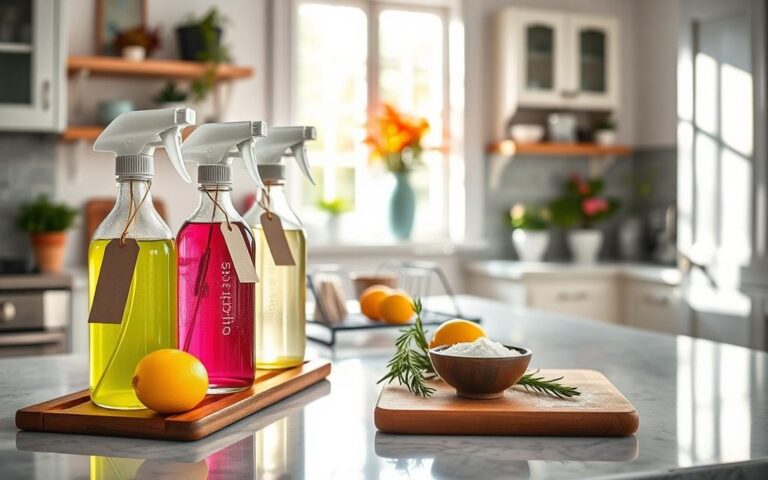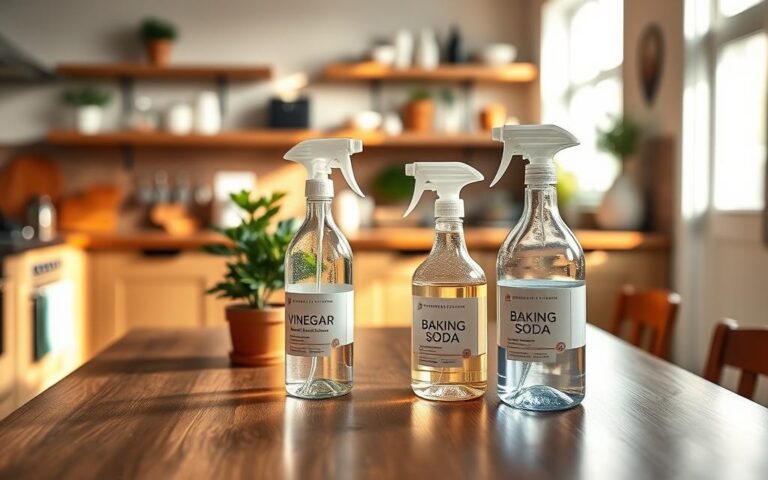

Did you know that about 70% of store-bought cleaning products have toxic chemicals? These chemicals can harm the environment and your health. As more people learn about these risks, they are turning to homemade cleaning products.
Using natural cleaning solutions helps keep homes clean. It also supports safer and healthier living spaces. Many people now prefer eco-friendly cleansers made from common household items.
These homemade cleaners can be as effective as chemical ones. Simple recipes allow anyone to create effective, budget-friendly cleaners. This article will provide recipes for homemade cleaning products to help you maintain a clean home without traditional cleaning risks.
Key Takeaways
- Homemade cleaning products often contain no harmful additives.
- Many natural cleaning solutions can be made from common kitchen items.
- Using eco-friendly cleansers reduces waste and environmental pollution.
- Creating chemical-free cleaners can lead to significant cost savings in the long run.
- Homemade options can be tailored to meet individual cleaning preferences and needs.
Introduction to Homemade Cleaning Products
In recent years, more people are using homemade cleaning products. They explore DIY cleaning recipes due to health and sustainability concerns. Rising costs of commercial cleaners also drive this trend.
Creating homemade cleaning products means understanding how to use natural ingredients. Common items like vinegar, baking soda, and essential oils can handle household cleaning tasks well. These ingredients not only clean effectively but also reduce our exposure to harsh chemicals.
The flexibility of DIY recipes lets people experiment with different combinations. You can personalize the scents and strengths according to your preferences. Natural cleaning solutions provide a fun opportunity for creativity, making cleaning more enjoyable.

Benefits of Using Homemade Cleaning Products
Homemade cleaning products offer many advantages. They can save money and create healthier living spaces. Learning about these benefits may inspire others to try DIY cleaning.
Cost Savings
A big reason to use homemade cleaning products is their low cost. Ingredients like vinegar, baking soda, and citric acid are cheap and versatile. Homemade options save money without sacrificing quality.
These savings can add up, especially in larger homes that need frequent cleaning products.
Eco-Friendly Ingredients
Choosing eco-friendly cleaners is another advantage of homemade products. Store-bought cleaners often have harmful chemicals that can hurt the environment. Homemade cleaners do not contain these toxins, leading to a greener cleaning routine.
Using natural ingredients helps reduce plastic waste and chemical runoff, which supports sustainability.
Healthier Home Environment
Homemade cleaners provide health benefits worth noting. Reducing exposure to toxic substances is important for families with kids and pets. Many commercial products have irritants that can cause allergies or breathing problems.
Homemade cleaners improve air quality and create a safer living space. This makes them a smart choice for health-conscious families.
Essential Supplies for DIY Cleaning Recipes
To create homemade cleaning products, you need to know the essential supplies. Recognizing common household items for cleaning is important. Understanding these ingredients helps make cleaning easier and more effective.
Common Household Items
Several easily accessible ingredients can form the backbone of most DIY cleaning recipes:
- Vinegar: An excellent natural disinfectant, ideal for cutting through grease and deodorizing.
- Baking Soda: A versatile powder useful for scrubbing and neutralizing odors.
- Lemon Juice: Known for its acidity, it can help remove stains and provides a fresh scent.
- Essential Oils: These offer pleasant fragrances and have antimicrobial properties in some cases.
Safety Precautions
Safety is very important when using homemade cleaners. Following safety precautions ensures effective and secure cleaning:
- Always wear gloves to prevent skin irritation or allergies when handling cleaning agents.
- Work in a well-ventilated area to avoid inhaling fumes when mixing strong ingredients.
- Know the properties of each ingredient, especially when combining substances.
- Label containers clearly to prevent confusion and ensure proper storage.
All-Purpose Cleaner Recipes
Creating all-purpose homemade cleaners can improve your cleaning routine. These versatile solutions tackle various surfaces. Below are three easy recipes for cleaners that offer unique benefits and scents.
Vinegar-Based All-Purpose Cleaner
This vinegar-based cleaner combines vinegar with water for a powerful solution against grime. To create this cleaner:
- Mix 1 cup of white vinegar with 1 cup of water.
- Add essential oils for fragrance, such as lavender or lemon.
This cleaner works wonders on glass, countertops, and kitchen appliances.
Baking Soda All-Purpose Cleaner
Baking soda serves as a gentle abrasive and is great for cleaning. To prepare this cleaner:
- Combine 1/2 cup of baking soda with enough water to form a paste.
- For added cleaning power, mix in a few drops of essential oil.
This multi-use cleaner is perfect for sinks, tubs, and appliances. It ensures surfaces shine without scratches.
Citrus-Scented Cleaner
A refreshing citrus-scented cleaner can make any task more enjoyable. To make this delightful solution:
- Steep lemon or orange peels in 2 cups of vinegar for a week.
- Strain the mixture and dilute it with an equal part of water before use.
This cleaner is ideal for surfaces that benefit from a fresh scent, including kitchen counters and bathroom fixtures.
These recipes show how simple it is to create effective all-purpose cleaners. By using everyday ingredients, anyone can enjoy great cleaning solutions at home.
Bathroom Cleaning Solutions
Cleaning the bathroom needs special solutions to fight moisture and stop mildew buildup. Natural ingredients for cleaning create a safe and effective space. This section shares several recipes for cleaning tasks in the bathroom using eco-friendly products.
Natural Toilet Bowl Cleaner
A common recipe for a non-toxic toilet cleaner uses baking soda and vinegar. Add one cup of baking soda, then one cup of vinegar into the toilet bowl. Let the mixture fizz for a few minutes, then scrub with a toilet brush for a fresh finish.
Shower and Tub Cleaner
To keep your shower and tub clean, mix vinegar and dish soap. Combine equal parts of both in a spray bottle. Spray the solution on surfaces and let it sit for a few minutes before scrubbing.
This cleaner effectively tackles soap scum and mildew, leaving a bright finish.
Sink and Countertop Cleaner
For quick cleaning of sinks and countertops, mix equal parts of rubbing alcohol and vinegar in a spray bottle. This mixture is a great disinfectant and safe for surfaces like granite and laminate. Spray it on surfaces, let it sit, and then wipe with a cloth for a spotless shine.
| Cleaning Item | Ingredients | Usage |
|---|---|---|
| Toilet Bowl | Baking soda and vinegar | Add to bowl, let fizz, scrub |
| Shower and Tub | Vinegar and dish soap | Spray, wait, scrub |
| Sink and Countertop | Rubbing alcohol and vinegar | Spray, wait, wipe |
Kitchen Cleaning Products
The kitchen needs special care for cleaning. Homemade cleaning solutions can handle different tasks in your cooking space. This section shares recipes for homemade dish soap, a surface sanitation spray, and a strong grease fighter.
These recipes prioritize safety, ease of use, and effective cleaning.
Homemade Dish Soap
Making homemade dish soap is easy and very effective. One recipe uses liquid castile soap and essential oils for fragrance. This natural choice lets you clean your kitchen without harsh chemicals.
Mix 1 cup of liquid castile soap and 1 tablespoon of your favorite essential oil in a reusable bottle. Essential oil options include tea tree or lemon. Shake gently to combine before using.
Surface Sanitation Spray
For quick surface sanitation, a spray of vinegar and water works well. Mix equal parts of white vinegar and water in a spray bottle. This solution helps clean countertops and cutting boards, fighting bacteria effectively.
Always rinse food-preparation areas with water after applying to remove any vinegar residue.
Grease Fighter
You can remove grease with a simple mix of baking soda and dish soap. Combine 1 cup of baking soda and 1/4 cup of homemade dish soap in a small bowl. Apply this paste to greasy surfaces and let it sit for a few minutes before scrubbing.
Laundry Cleaning Options
Homemade laundry products are an effective and eco-friendly way to keep clothes fresh and clean. The recipes below show how to make natural laundry detergent and offer alternatives to traditional fabric softeners. Each option is safe for various fabrics and helps create a healthier home environment.
DIY Laundry Detergent
This simple recipe for natural laundry detergent combines washing soda, borax, and grated soap. This will give you a powerful cleaning solution. Each ingredient helps break down stains and odors while being gentle on fabrics.
- 1 cup washing soda
- 1 cup borax
- 1 bar of natural soap (like Fels-Naptha or Castile), grated
Mix all the ingredients well together. Use about 2 tablespoons per load. It works great in both standard and high-efficiency washers.
Fabric Softener Alternatives
If you want to avoid synthetic fragrances in fabric softeners, try vinegar and essential oils. Both options add softness and a fresh scent without harmful chemicals.
- White vinegar: Add 1 cup during the rinse cycle. This non-toxic option reduces static and softens clothes naturally.
- Essential oils: Mix a few drops of your favorite essential oil with water in a spray bottle. Lightly mist clothes before drying for a personal fragrance.
Floor Cleaning Recipes
Effective floor cleaning solutions can greatly help in keeping your home clean and inviting. This section has recipes for different flooring types.
These recipes ensure that cleanliness and care are not overlooked.
Hardwood Floor Cleaner
This homemade hardwood cleaner is simple and effective. Combine equal parts vinegar and water in a spray bottle.
This solution cleans and shines without harming the wood finish. It removes dirt while leaving a streak-free surface.
Tile and Grout Cleaner
To tackle stubborn stains in tile and grout, you need a strong mix. A combination of baking soda and hydrogen peroxide makes a paste that gets deep into the grime.
Apply this mixture, let it sit for a few minutes, then scrub to reveal clean, refreshed tiles.
Carpet Stain Remover
To remove carpet stains, mix vinegar, dish soap, and water in a spray bottle. This works well on many spills and stains.
Before applying it to a larger area, do a spot test to ensure the fabric remains undamaged.
Window and Glass Cleaners
Cleaning windows and glass surfaces is simple with homemade products. A homemade glass cleaner saves money and is eco-friendly. It reduces the use of harmful chemicals and promotes sustainable living.
Streak-Free Glass Cleaner Recipe
This recipe offers a safe solution for sparkling glass. Combine the following ingredients:
- 1 cup vinegar
- 1 cup water
- 1 tablespoon cornstarch
Mix these ingredients in a spray bottle. Shake well before each use. This cleaner provides a streak-free finish and keeps your home clean.
Natural Window Wash
Using essential oils can improve the cleaning experience. Combine:
- 2 cups water
- 1/4 cup vinegar
- 10-15 drops of essential oil (like lemon or lavender)
Store this mixture in a recyclable spray bottle for easy access. Regular use achieves gleaming glass without the impact of commercial cleaners.
Air Fresheners and Deodorizers
Creating a fresh and welcoming home is easy with homemade air fresheners and deodorizers. These DIY solutions remove bad smells and fill the air with nice scents. They do this while avoiding harsh chemicals found in store-bought products.
Here are some simple recipes to enhance the freshness of any room.
Easy Room Spray Recipes
One of the simplest ways to make natural air fresheners is through room sprays. Mix water and essential oils for an effective and customizable solution. Here’s what you need:
- 1 cup of distilled water
- 2 tablespoons of witch hazel or vodka
- 30-50 drops of essential oils (such as lavender, lemon, or peppermint)
Combine these ingredients in a spray bottle and shake well before using. This refreshing spray can neutralize odors and create a pleasant environment in any room.
Carpet Freshening Powder
If you want to keep carpets smelling fresh, try a homemade carpet freshening powder. This method uses baking soda and essential oils to absorb odors and provide a nice scent. The recipe is easy:
- 1 cup of baking soda
- 20-30 drops of your favorite essential oil
In a bowl, mix the baking soda and essential oil well. Sprinkle the mixture on the carpet and let it sit for at least 15 minutes before vacuuming. Baking soda is a powerful deodorizer, making this an effective carpet cleaning option.
By using these easy room spray recipes and carpet freshening powder, you can enjoy a healthier home. These natural air fresheners not only improve the living space but also promote an eco-friendly approach to home care.
How to Store Homemade Cleaning Products
Proper storage techniques are important for homemade cleaning products. The right containers keep them effective and safe at home.
Appropriate Containers
Using suitable containers is crucial for storing homemade cleaners. Glass bottles are great, especially dark-colored ones like amber or cobalt.
These colors protect the contents from light degradation. For larger batches, use big glass jars with lids or clamps for safe storage.
A 16 oz amber glass bottle is perfect for all-purpose sprays. Small 4 oz cobalt glass bottles work well for room sprays.
Clear glass is good for substances like vinegar.
Labeling for Safety
Clear labeling is essential to prevent misuse. Every container should have a label stating the contents and usage instructions.
This is especially important in homes with children or pets. You can use printable labels or customizable chalkboard labels.
Accurate labeling helps everyone identify the products safely. For more detailed guidance on storing homemade cleaners, visit this resource.
Tips for Effective Cleaning with Homemade Products
Utilizing homemade cleaning products can make cleaning easier and improve results. Effective techniques help achieve a cleaner space using natural ingredients. These practices can lead to better outcomes with these cleaners.
Techniques for Best Results
When using homemade cleaners, timing and technique are very important. Here are some methods to consider:
- Let Cleaners Sit: Allowing cleaners to rest on surfaces helps them penetrate tough stains, making them easier to wipe away.
- Order of Cleaning Tasks: Start dusting before more intensive tasks. This prevents dirt and dust from settling on clean areas.
- Use Microfiber Cloths: These cloths trap dirt more effectively than traditional options, enhancing your cleaning results.
Storage Tips for Homemade Cleaners
Maintaining the effectiveness of homemade cleaners is essential for future use. Proper storage can help achieve this goal:
- Cool and Dark Conditions: Store cleaners away from sunlight and in cool areas to keep ingredients effective, especially essential oils.
- Airtight Containers: Use airtight containers to prevent evaporation, ensuring cleaner potency over time.
- Labeling: Clearly label all containers with their contents and preparation dates. This helps monitor freshness and avoid mix-ups.
Frequently Asked Questions about DIY Cleaning Products
Many people want to know about homemade cleaning products. They have questions about their safety and effectiveness. This section answers common inquiries about DIY cleaner safety and effectiveness.
Are homemade cleaners safe for children and pets?
Homemade cleaners are generally safe, especially when using non-toxic ingredients. Vinegar, baking soda, and essential oils pose little risk to children and pets. However, it’s best to supervise cleaning processes to prevent accidental contact with any solutions.
Always store homemade cleaners out of reach and label them clearly.
How do I ensure my homemade cleaners are effective?
The effectiveness of DIY cleaners comes from understanding ingredient properties. For example, vinegar is a powerful antibacterial due to its acidity. Baking soda works as a natural abrasive, ideal for scrubbing.
By choosing the right ingredient combinations, you can make effective cleaning solutions. Always test small areas first to ensure good results and avoid problems.
Closing Thoughts on Homemade Cleaning Products
Making your own cleaning products can feel rewarding and is a smart choice for the planet. By trying out different recipes, people can save money and create a healthier home. These recipes are simple and effective, allowing everyone to personalize their cleaning habits.
Encouragement to Try New Recipes
People should explore beyond basic cleaning solutions. Homemade cleaning offers many creative options that focus on eco-friendly methods. Each new recipe shows how natural ingredients can take the place of harsh chemicals for a safer home.
For those wanting to learn more, many resources can help. A great starting point is this comprehensive guide.
Final Tip for Sustainability
As we embrace sustainable cleaning, it’s vital to keep learning and adjusting our methods. Each time we make homemade cleaners, we grow and innovate. Continued experimentation not only improves our cleaning but also helps reduce plastic waste.
Being active in this sustainable approach can enhance your cleaning routine. You also contribute positively to our planet.