
Building a green cleaning routine helps homeowners and renters in the United States cut costs and save time.
It also creates a healthier home by using non-toxic methods and natural cleaning products.
The goal is to lower chemical exposure and reduce environmental impact with an efficient cleaning plan.
This article outlines practical steps for building a green cleaning routine focused on sustainable house cleaning.
Readers will learn eco-friendly cleaning tips that reduce household expenses through fewer disposable supplies, bulk buying, and DIY solutions.
They will also discover ways to cut cleaning time with scheduling, decluttering, and using smart tools.
Benefits include lower costs, improved indoor air quality, and safer surfaces for children and pets.
The following sections provide a clear roadmap.
This includes understanding green cleaning basics, choosing eco-friendly products, and DIY options.
Also covered are daily and seasonal schedules, decluttering strategies, and essential tools.
Surface-specific techniques, household involvement, indoor air quality, and sustainable carpet care are included.
Lastly, waste reduction, proper disposal, progress tracking, and learning resources are discussed.
Key Takeaways
- Create a repeatable plan that uses non-toxic cleaners to protect family health.
- Apply green living tips and eco-friendly cleaning tips to lower recurring costs.
- Use scheduling and decluttering to cut the time spent cleaning each week.
- Choose natural products or DIY solutions to reduce waste and chemical use.
- Track progress and adjust the routine for long-term sustainable house cleaning.
Understanding the Importance of a Green Cleaning Routine
Adopting a green cleaning routine focuses on health, safety, and saving money at home. It swaps harsh chemicals for safer products and smarter tools. These changes cut waste and energy use.
Simple adjustments can greatly improve indoor air quality and daily cleaning. Readers will learn how easy it is to make a difference.

What is Green Cleaning?
Green cleaning means using products and methods that lower toxic exposure and harm to the environment. It involves non-toxic cleaners, reusable cloths, and saving energy.
When choosing supplies, look for certified labels like EPA Safer Choice, Green Seal, or Ecologo. These confirm real safety beyond terms like natural or biodegradable.
Benefits of Green Cleaning
Switching to green cleaning lowers indoor air pollution by cutting volatile organic compounds. This reduces skin irritation and breathing issues from regular cleaners.
Using reusable tools and DIY cleaners saves money. Common ingredients include vinegar, baking soda, and castile soap. Buying in bulk and using concentrate formulas helps cut plastic waste.
Green cleaning also lowers water pollution and plastic use. Studies show many household cleaners add indoor pollutants. Using safe methods protects children and pets from harm.
Common Misconceptions
Some think green cleaning costs too much. DIY recipes and bulk purchases usually save money over time. Small changes cut supply bills effectively.
Others worry that eco-friendly products don’t work well. But good technique and concentrated brands can match regular cleaners without harsh chemicals.
Many believe green cleaning needs a full lifestyle change. Yet simple steps like refillable soaps, air circulation, and microfiber cloths bring big benefits easily.
By applying these ideas, readers gain healthier air, lower costs, and easier upkeep. This foundation helps them pick products and create a fitting cleaning routine.
Choosing Eco-Friendly Cleaning Products
Picking the right supplies makes green cleaning easier and more effective. A few trusted brands and simple homemade formulas help households switch to natural products. Thoughtful choices reduce exposure to harsh chemicals and support non-toxic cleaning at home.
Recommended Brands for Green Cleaning Products
Seventh Generation, Mrs. Meyer’s, Method, Ecover, Better Life, ECOS, and Dr. Bronner’s are widely available in U.S. stores. Many brands offer concentrated formulas to cut packaging waste. Method and Ecover have refill programs in select retailers.
Seventh Generation and ECOS provide biodegradable packaging options in some lines. Look for EPA Safer Choice, Green Seal, or UL ECOLOGO certifications when buying.
DIY Natural Cleaning Solutions
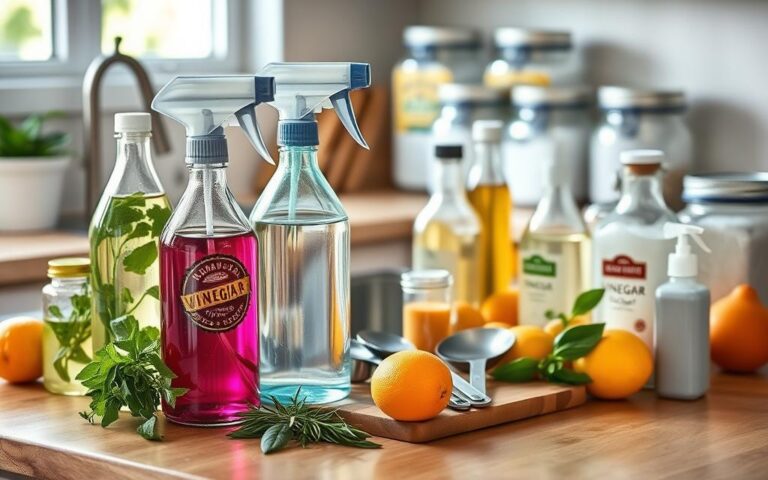
You can make an all-purpose cleaner with one part white vinegar to three parts water. Add a few drops of Dr. Bronner’s castile soap or natural essential oil for scent. For streak-free windows, mix equal parts vinegar and water or use rubbing alcohol with water.
Baking soda forms a paste suitable for scrubbing grout and ovens. Hydrogen peroxide (3%) works for disinfecting and removing stains. Lemon juice cuts grease and brightens surfaces but avoid acids on marble or granite.
Store homemade solutions in labeled, sealed containers out of reach of children and pets. Test any cleaner on a hidden spot before full use to prevent damage.
Ingredients to Avoid
Avoid ammonia and chlorine bleach except for tasks needing heavy sanitation. Quaternary ammonium compounds, or quats, can cause respiratory problems and should be skipped in routine use. Phthalates and triclosan pose long-term health risks. Synthetic fragrances often contain hidden VOCs that harm indoor air quality.
Understanding these ingredients helps consumers pick products aligned with non-toxic methods. Opt for fragrance-free or naturally scented options when possible.
| Brand | Notable Features | Refill/Concentrate | Certifications |
|---|---|---|---|
| Seventh Generation | Plant-based cleaners, wide retail availability | Concentrated options available | EPA Safer Choice, Green Seal on some products |
| Mrs. Meyer’s | Garden-inspired scents, natural formulas | Smaller concentrate range | Some products have third-party verification |
| Method | Design-forward bottles, biodegradable formulas | Refill stations at select stores | UL ECOLOGO on select lines |
| Ecover | Plant-based, focus on reduced packaging | Refill and concentrated options in some markets | EPA Safer Choice, UL ECOLOGO on products |
| Better Life | Gentle formulas, good for sensitive skin | Concentrates for some cleaners | Third-party eco-certifications on select items |
| ECOS | Affordable, vegan, plant-powered cleaners | Concentrated lines and bulk options | EPA Safer Choice, cruelty-free claims |
| Dr. Bronner’s | Multipurpose castile soap, organic ingredients | Highly concentrated, versatile uses | Fair Trade and organic certifications |
When shopping, compare cost per use. Prefer concentrated or refill formats. Pick fragrance-free or naturally scented products to follow eco-friendly cleaning tips.
Patch-test new cleaners and adapt your choices to your household’s needs to support lasting green cleaning practices.
Creating a Cleaning Schedule
Building a green cleaning routine starts with a simple schedule. Short daily habits stop grime from piling up. Weekly and monthly tasks keep the home clean with fewer chemicals.
Seasonal work helps with deep cleaning and extends the life of surfaces and appliances.
Daily Cleaning Tasks
Spending a few minutes each day helps a lot. Wiping high-touch areas with a damp microfiber cloth removes germs without harsh sprays.
Spot-sweeping or vacuuming busy areas stops dirt from spreading. Loading the dishwasher or washing dishes right away prevents stains and smells.
After cooking, wipe counters with an eco-friendly all-purpose cleaner. Clear surfaces to make future cleaning faster. These green cleaning habits save time and energy.
Weekly and Monthly Maintenance
Weekly chores take a bit more time but stop big cleaning sessions later. Vacuum and mop floors using microfiber mops and plant-based cleaners.
Clean bathrooms with baking soda, hydrogen peroxide, or EPA Safer Choice products for tough spots. Wash bedding weekly and check HVAC filters monthly.
Monthly tasks include deep-cleaning appliances like ovens and refrigerators. Descale kettles with vinegar and wipe baseboards and vents. Also clean window tracks and showerheads to keep water flowing well.
Adapting for Seasonal Cleaning
Seasonal cleaning focuses on big tasks that protect your home year-round. In spring and fall, declutter closets and wash curtains and windows.
Steam clean carpets or use sustainable carpet-care to remove deep dirt. Outdoor chores include cleaning gutters and doing exterior touch-ups as needed.
Homes with pets, kids, or allergy sufferers should vacuum and wash linens more often. Adjust cleaning frequency based on your home’s activity.
Save time by batching tasks by room so one trip finishes several chores. Use multi-purpose cleaners to reduce product changes.
Set timers for focused 15–30 minute cleaning sessions to keep momentum. Run laundry during off-peak electricity hours to save energy and costs.
| Task | Frequency | Suggested Method |
|---|---|---|
| Wipe high-touch surfaces | Daily | Damp microfiber cloth with eco-friendly all-purpose cleaner |
| Spot sweep / vacuum | Daily | Stick vacuum or broom for high-traffic areas |
| Bathroom cleaning | Weekly | Baking soda, hydrogen peroxide, or EPA Safer Choice products |
| Floor mopping | Weekly | Microfiber mop and plant-based floor cleaner |
| Change HVAC filter | Monthly | Check and replace or clean according to manufacturer |
| Deep appliance clean | Monthly | Oven and refrigerator care, descale kettles with vinegar |
| Seasonal deep clean | Spring / Fall | Wash curtains, steam-clean carpets, clean gutters, declutter closets |
| Adjustments for pets/children | As needed | Increase vacuuming and linen changes to reduce allergens |
Decluttering for Easier Cleaning
A clear home makes cleaning faster, cheaper, and greener. Reducing items in a room cuts dust buildup. It also opens surfaces for quick wiping and limits objects needing separate care.
That lowers time spent with cloths and cleaners. It supports a green cleaning routine that saves effort and products.
How decluttering affects cleaning efficiency
When counters and floors are free of extra items, dust has fewer places to settle. Surfaces become fully accessible. A single pass with a microfiber cloth or refillable spray works well.
Less clutter means fewer small items to move, sort, and clean one by one. Fewer possessions reduce the need for multiple specialized cleaners. This matches eco-friendly tips favoring multipurpose, non-toxic solutions.
A streamlined space cuts cleaning sessions from hours to minutes. It helps maintain sustainable house cleaning habits.
Strategies for effective decluttering
Use the four-box method to decide quickly: keep, donate, recycle, or trash. Work by category to avoid decision fatigue. For example, clear clothes first, then paper, then toys.
The Marie Kondo approach helps curb impulse keeping by holding onto items that spark joy. Short sessions of 15–30 minutes produce steady progress without burnout. This method fits green living tips by preventing waste from excess consumption.
Donate usable items to Goodwill or the Salvation Army. Check local textile recycling programs for worn textiles. Use Best Buy trade-in or community e-waste events for old electronics to keep hazardous waste out of landfills.
Maintaining a clutter-free space
Daily 5–10 minute surface resets stop clutter from building up. Adopt a one-in-one-out rule for new purchases to control volume. Mark storage zones and label bins so everyone knows where things belong.
Use vertical storage to free floors. Reusable baskets and boxes from bamboo or recycled plastic work well and support sustainable house cleaning goals. These keep items organized and cut time needed for routine cleaning.
| Task | Time | Purpose | Eco Benefit |
|---|---|---|---|
| Timed declutter session | 15–30 minutes | Focus on one area or category | Prevents wasteful replacements |
| Four-box sorting | Varies by room | Decide keep, donate, recycle, trash | Increases donations, reduces landfill |
| Daily surface reset | 5–10 minutes | Clear counters and high-traffic spots | Reduces cleaning time and product use |
| Textile and e-waste drop-off | Once a season | Dispose responsibly | Protects environment, supports recycling |
| One-in-one-out rule | Ongoing | Control household inventory | Limits needless consumption |
Essential Tools for Green Cleaning
Stocking the right tools makes green cleaning efficient and gentle on the planet. The focus is on durable items that reduce waste.
These tools also help cut costs over time and fit smart green cleaning ways at home.
Must-Have Cleaning Tools
Microfiber cloths handle dust and glass well without chemical sprays. A quality broom and dustpan clear debris quickly.
A HEPA-filter vacuum traps allergens and improves indoor air quality. Steam cleaners sanitize without harsh detergents. A mop with washable microfiber pads replaces disposable ones.
Sturdy scrub brushes tackle grout and tough grime. Reusable spray bottles let homeowners mix safe solutions. A simple bucket completes the practical green cleaning essentials.
Eco-Friendly Alternatives to Common Supplies
Replace single-use paper towels with beeswax wraps or silicone food covers when you can. Use washable cotton dishcloths instead of synthetic sponges.
Natural sponges can be composted at the end of their life. Refillable glass bottles reduce plastic waste and work with concentrated cleaners.
Biodegradable scrubbers and compostable trash bags lower landfill impact. Swap single-use mop pads for machine-washable microfiber pads. These tips help households adopt long-term green cleaning habits.
Organizing Cleaning Supplies
A portable caddy keeps supplies handy for moving from room to room. Label bottles clearly so everyone knows the contents and dilution ratios.
Keep a small kit of daily essentials near the kitchen or bathroom for quick touch-ups. Use reclaimed wood or metal shelving for durable, sustainable storage.
Post a checklist on or near the storage area to track what needs restocking. This supports consistent green cleaning habits.
Maintenance and Replacement
Microfiber cloths last many washes when laundered separately from lint-producing fabrics and dried on low heat.
Replace sponges regularly and compost natural options. Clean and dry scrub brushes to prevent mildew buildup.
Inspect mop pads, vacuum filters, and steam-cleaner parts on a schedule. Replace parts before failure to extend tool life.
Proper care keeps tools effective and supports ongoing green cleaning. It also reduces waste.
Techniques for Effective Green Cleaning
A practical green cleaning routine saves time and cuts down on harsh chemicals. The tips below focus on surface-specific care and smart use of natural cleaning products. They also suggest fast habits to keep a home fresh with less effort.
Each suggestion fits into everyday life and supports long-term maintenance.
Best Practices for Different Surfaces
Wood: wipe with a damp microfiber cloth and dry immediately to prevent swelling. Avoid vinegar on unfinished wood. Use a small amount of olive oil or a wood-specific polish for finished surfaces.
Stone: pick a pH-neutral cleaner for granite and marble. Avoid acidic or abrasive cleaners that can damage the surfaces. Test any product in a hidden spot first.
Stainless steel: clean with mild dish soap and a microfiber cloth to prevent streaks. Wipe along the grain and buff dry for shine.
Glass: use a diluted vinegar or alcohol-based solution and a lint-free cloth. Spray lightly and wipe in an S pattern to reduce streaks.
Upholstery: vacuum before treating stains. Spot-test any natural cleaning product on fabric seams. For many stains, use dilute hydrogen peroxide or baking soda paste. Rinse and blot carefully afterward.
How to Make the Most of Natural Cleaners
Baking soda acts as a gentle abrasive and deodorizer. Use it to lift grime from sinks, pots, and oven racks.
Vinegar cuts grease and works as a mild disinfectant on many hard surfaces. Do not use vinegar on stone or unfinished wood. Mix one part white vinegar to one part water for general cleaning.
Hydrogen peroxide removes stains and sanitizes. Use a 3% solution and let it sit at least one minute on nonporous surfaces for disinfection.
Essential oils like tea tree and lavender add antimicrobial properties and scent. Use them sparingly and check for allergies. Add a few drops to water and mild soap in a spray bottle for a pleasant cleaner.
Never mix bleach with vinegar or ammonia. Label homemade cleaners clearly. Store them out of reach of children and pets. Always ventilate when using concentrated solutions.
Time-Saving Cleaning Hacks
Work top-to-bottom to avoid re-cleaning lower surfaces. Start with ceiling fans and high shelves; then move to counters and floors.
Use mattress encasements to reduce deep cleaning. They trap allergens and make maintenance easier.
Dryer balls reduce lint and static. They help limit dust that settles on furniture. Place mats at entrances to catch dirt early.
Adopt a 15-minute nightly tidy routine to keep clutter low and cleaning tasks short. Use multi-surface microfiber cloths to speed up chores and reduce tool switching.
Safety and Practical Notes
Ventilate when using concentrated natural cleaners or strong vinegar solutions. Wear gloves for tasks that irritate skin. Keep all natural cleaning products stored safely away from children and pets.
These eco-friendly cleaning tips help maintain a clean home and protect your health.
| Surface | Recommended Cleaner | Key Tip |
|---|---|---|
| Wood | Microfiber cloth, mild soap, wood polish | Wipe damp, dry immediately; avoid vinegar on unfinished wood |
| Stone (Granite/Marble) | pH-neutral cleaner | Do not use acidic or abrasive products; test in a hidden spot |
| Stainless Steel | Mild dish soap, microfiber | Wipe with the grain and buff dry to prevent streaks |
| Glass | Vinegar or alcohol solution, lint-free cloth | Spray lightly and wipe in an S pattern for fewer streaks |
| Upholstery | Vacuum, baking soda, dilute hydrogen peroxide | Vacuum first; always spot-test before treating larger areas |
Involving the Whole Household
Getting everyone involved makes a green cleaning routine easier to maintain. Clear roles and short tasks split the work evenly. Small changes by many create lasting habits at home.
Engaging Family Members in the Process
Assign clear roles so each person knows their task. Use simple checklists for morning and evening chores. Visible expectations help reduce confusion.
Sharing tasks cuts cleaning time and builds good habits. It also helps spread green living tips throughout the house.
Teaching Kids About Green Cleaning
Match tasks to each child’s age. Toddlers can tidy toys and wipe spills with help. Elementary kids can dust, sort recycling, and care for pets.
Teens can vacuum, mop, and mix natural cleaners safely. Explain why some ingredients are avoided to teach eco-friendly health and planet care.
Creating a Team Cleaning Plan
Use rotating chores or a chart on the fridge. Digital apps like Trello or Google Keep suit families who like screens. Keep tasks short and easy to do.
Include rewards for consistency, like family outings or extra screen time. Plan a monthly family clean-up for bigger tasks needing everyone’s help.
Offer tools like long-handled dusters and light vacuums so all can join in. Invite feedback and adjust plans to keep cleaning practical and fair.
Maintaining Indoor Air Quality
Indoor air can be more polluted than outdoor air due to VOCs from cleaning products and off-gassing from furniture. Fine particles stirred up during chores also add to indoor pollution. A green cleaning routine uses non-toxic methods and cuts dust resuspension.
That approach supports healthier breathing for everyone at home.
Importance of Indoor Air Quality
People spend most of their time indoors, so air quality affects sleep, focus, and allergy control. Volatile organic compounds from cleaners can cause irritation and headaches. Using eco-friendly cleaning products lowers these harmful emissions.
Particulate matter from vacuuming or sweeping can worsen asthma. Choosing a green routine with HEPA filters and gentle dusting keeps particles from spreading around the home. Small steps reduce long-term exposure.
Plants That Purify Indoor Air
Houseplants help with humidity and remove some VOCs but are not a full solution. Low-maintenance options for U.S. homes include spider plant (Chlorophytum), snake plant (Sansevieria), pothos (Epipremnum aureum), and peace lily (Spathiphyllum).
Place peace lilies out of pets’ reach, as they are toxic if ingested. Plants support non-toxic cleaning and ventilation in your home. Adding a few pots in key rooms helps create a calmer indoor climate.
Regular Ventilation Practices
Opening windows for 10–15 minutes daily helps flush indoor pollutants when outdoor air is clean. Use exhaust fans in kitchens and bathrooms during cooking or showering to remove moisture and odors.
Change HVAC filters regularly and choose MERV ratings of 8–13 suitable for your system. Run whole-house fans or mechanical ventilation if available for steady air exchange.
Portable HEPA air purifiers work well in high-use rooms to catch fine particles. Keep indoor humidity between 30–50 percent to reduce mold and dust mites. Use and clean dehumidifiers or humidifiers often to avoid adding contaminants.
| Issue | Practical Action | Why It Helps |
|---|---|---|
| VOCs from cleaners | Switch to non-toxic cleaning methods and certified eco products | Reduces chemical emissions and irritation |
| Particulate matter | Use HEPA vacuums and portable HEPA purifiers | Removes fine dust and allergens from the air |
| Excess humidity | Maintain 30–50% humidity with dehumidifiers or humidifiers | Limits mold growth and dust mite populations |
| Poor ventilation | Open windows daily, use exhaust fans, run mechanical ventilation | Promotes air exchange and lowers indoor pollutant levels |
| Source control | Adopt an environmentally friendly home cleaning plan and reduce clutter | Minimizes surfaces that trap dust and VOC-emitting materials |
Eco-Friendly Carpet and Upholstery Care
A green cleaning routine for carpets and upholstery keeps fabrics healthy and lasts longer. Regular care reduces harsh treatments and supports sustainable house cleaning goals. Small habits save time, money, and help the planet.
Sustainable Methods for Cleaning Carpets
Vacuum often with a HEPA-filter vacuum to remove fine particulates and allergens. Dry-cleaning powders made from baking soda control odors without heavy detergents. Limit steam-cleaning to deep-sanitizing sessions using biodegradable, low-toxicity solutions.
When hiring professionals, ask about certifications and cleaning chemicals. Trusted providers explain extraction methods that reduce residue and water use. Read this helpful guide for more: eco-friendly carpet care tips.
Using Natural Products for Upholstery
Mild castile soap diluted in water gently cleans many fabric surfaces. A 50/50 mix of water and white vinegar removes odors and light stains after patch testing. Fabrics rated for steam benefit from upholstery-safe steam cleaning that avoids solvents.
For leather, use a pH-neutral cleaner and follow with natural conditioner like neatsfoot oil or beeswax-based products. Natural cleaning products reduce VOCs and support healthier homes.
Spot Cleaning Tips
Act quickly on spills. Blot liquids with a clean cloth instead of rubbing, which pushes stains deeper. Sprinkle baking soda to absorb moisture and neutralize smells before vacuuming.
For protein stains or food, try diluted dish soap or hydrogen peroxide on a hidden test area first. For wine, blot immediately, apply gentle cleanser, rinse with little water, and blot dry. For pet urine, use enzyme-based cleaners to break down odors at the source.
Maintenance keeps carpets and upholstery looking good longer. Rotate rugs to even wear and use washable slipcovers. Consider low-VOC or natural fiber carpets like wool or jute when replacing flooring. These choices support a long-term green cleaning routine and sustainable house practices.
Reducing Waste in Cleaning
Cutting down on waste makes a green cleaning routine more effective and budget friendly. Small swaps and steady habits lower trash, save money, and keep a home healthy. The suggestions below focus on reusable materials, smarter packaging choices, and buying in bulk.
The Role of Reusable Cleaning Materials
Replacing disposables with reusables reduces single-use waste and cuts long-term costs. Choose washable microfiber cloths, mop pads, and glass or stainless-steel spray bottles. Compostable dusters work for some tasks, while cotton or bamboo dusters can be washed and reused.
Over five years, washable microfiber cloths and mop pads cost far less than constantly buying paper towels. This upfront investment pays off with fewer purchases and less landfill waste. It strengthens any green cleaning routine.
How to Recycle Cleaning Product Packaging
Rinse plastic and glass containers before recycling. Remove labels if local rules require it. Many programs accept #1 and #2 plastics, but reject mixed-material packaging.
For pump tops, spray nozzles, and hard-to-recycle items, explore TerraCycle programs or brand refill efforts. Brands like Seventh Generation, Method, and Ecover offer refill or reuse options at select stores. Sometimes, local recycling centers accept parts curbside services do not.
Choosing Bulk Products
Buying concentrated cleaners or bulk refills reduces packaging waste and lowers cost per use. Consider warehouse stores, refill stations at natural grocers, or concentrated formulas that dilute at home. Store bulk liquids in durable containers and label them clearly for safety.
Follow manufacturer instructions for correct dilution ratios. Transport bulk containers in secure, sealed packaging. These green cleaning hacks keep packaging out of landfills and make cleaning simpler and cheaper.
Other waste-reduction habits help too. Use smaller trash bins to discourage excess. Compost food scraps, and repurpose worn cleaning cloths as rags before disposal. Combining these moves creates a practical plan for reducing waste while keeping the home tidy and efficient.
Mindful Disposal of Cleaning Products
A green cleaning routine begins at disposal. Pouring bleach or solvents down drains harms water and septic systems. Choosing non-toxic cleaning methods cuts these risks and eases disposal for all homes.
The Importance of Proper Disposal
Many traditional cleaners have harmful ingredients that stay in the environment. Safe disposal protects local streams and drinking water. Using non-toxic products and finishing them fully helps keep homes eco-friendly.
Hazardous Waste Guidelines
Some items need special care: old bleach, solvents, drain cleaners, aerosol cans, and some pesticides. Check local hazardous waste programs for drop-off dates or permanent sites. The EPA’s Household Hazardous Waste guide explains proper handling and why it matters.
Before dropping off, follow local rules. Counties often list accepted materials and how to prepare them. If unsure, call the solid waste authority for advice.
Recycling Options
Empty containers can join curbside recycling after rinsing, if allowed. TerraCycle takes hard-to-recycle items that standard programs reject. Retailers like Home Depot and Lowe’s accept rechargeable batteries. Large or hazardous containers should go to special waste facilities, not curbside bins.
These steps save effort and reduce environmental impact. Try to use products fully. If safe, dilute small leftovers before disposal. Share extra usable product with neighbors or groups. For more on safe cleaning, see this guide: eco-friendly and safe best practices.
- Use non-toxic cleaning methods to limit hazardous leftovers.
- Follow municipal hazardous waste schedules for drop-offs.
- Rinse and recycle containers when allowed.
- Return batteries to retail take-back programs.
- Donate or share usable excess to reduce waste.
Tracking Progress and Benefits
When households adopt sustainable house cleaning, tracking progress shows its value and keeps momentum going. A simple system helps record savings, time, and health changes. This practice supports steady improvement and highlights green cleaning benefits for all family members.
Measuring the Impact of a Green Routine
Changes can be measured by numbers and impressions. Quantitative metrics include reducing spending on disposables and conventional cleaners. Track green cleaning savings by logging monthly expenses in a spreadsheet or app.
Time is another clear metric. Record weekly cleaning hours before and after new methods. Note changes in trash and recycling to show waste reduction.
Qualitative data is important too. Record fewer allergy or respiratory symptoms among household members. Short diary notes capture health shifts linked to green cleaning benefits.
Adjusting the Routine Based on Results
Data should guide adjustments. If time savings don’t appear, find bottlenecks like too many tasks or ineffective tools. Try microfiber cloths or ergonomic mops to improve the process.
If costs increase, check which product swaps are pricier. Use DIY recipes with vinegar and baking soda. Buying in bulk or choosing concentrated refills can cut costs. Adjust seasonally when schedules change.
Life events need flexibility. A new baby or pet may increase cleaning in some areas and reduce it in others. Use tracking notes to rebalance chores and keep green tips practical.
Celebrating Milestones and Success
Set clear milestones like 30 or 90 days of consistent practice, or a drop in monthly cleaning costs. Celebrate wins with small rewards such as a family meal or buying an energy-efficient bulb.
Share progress with friends or local groups for accountability. Public recognition strengthens habits and spreads green living tips. Celebrations help sustain motivation and lock in green cleaning benefits.
A long-term view shows savings, improved indoor air, and less waste. Consistent tracking makes sustainable cleaning practical, measurable, and rewarding.
Resources for Continuous Learning
To keep a green cleaning routine effective and current, readers should gather a mix of printed guides, reputable blogs, and community support. Practical books like The Naturally Clean Home by Karyn Siegel-Maier offer reliable DIY recipes. Clean My Space by Melissa Maker focuses on safe, efficient techniques.
Trusted sites such as The Spruce, Treehugger, and Mindful Momma provide daily eco-friendly cleaning tips and product reviews. These help when choosing natural cleaning products.
Online communities are useful for problem-solving and idea sharing. Subreddits like r/ZeroWaste and r/greenliving, Facebook groups about sustainable living, and forums such as the Green Cleaning Network allow people to swap tactics and ask questions.
Local Buy Nothing groups help source reusable tools and supplies. They reduce waste and cost while building local support for a green cleaning routine.
Local workshops and events give hands-on experience that complements reading. Extension services, community centers, and environmental nonprofits often run sessions on sustainable home care.
Retailers including Whole Foods and The Container Store sometimes host refill-station demos. City household hazardous waste events teach safe disposal practices for cleaning products.
For ongoing learning, subscribe to newsletters from the EPA or Green Seal. Follow reputable sustainability educators cautiously, verifying claims against certification info like EPA Safer Choice.
Review research, product guides, and certification updates periodically. This helps maintain safety and effectiveness and keeps green living tips practical over time.