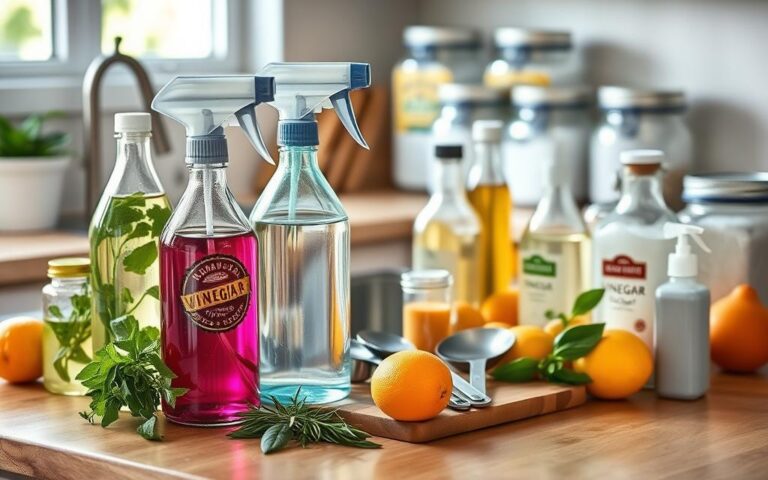

This article is a practical guide to making homemade cleaning products. It explains what these cleaners are and introduces terms like DIY cleaning recipes and green cleaning products.
Readers will find simple ingredient lists that use common items and natural oils. Safety notes and step-by-step tips are provided to help replace commercial brands like Seventh Generation or Mrs. Meyer’s.
The guide covers basic room-by-room recipes. It includes tips for the kitchen, bathroom, living room, bedroom, and laundry. Users will also find seasonal tips, storage guidance, and eco-friendly packaging ideas.
The target audience is homeowners, renters, parents, pet owners, and eco-conscious consumers in the U.S. They seek safer, cost-effective cleaning options. The promise is clear: easy DIY recipes that work well while reducing chemical exposure and waste.
Key Takeaways
- Homemade cleaning products use common household items for safe, low-cost cleaning.
- DIY cleaning recipes can match many store-bought cleaners when used correctly.
- The guide covers recipes for every room plus seasonal and storage tips.
- Natural oils and simple ingredients provide aroma and cleaning power.
- Practical safety notes help users handle and store homemade household cleaners responsibly.
Introduction to Homemade Cleaning Products

Interest in homemade cleaning products has grown. People want to reduce chemical exposure and find budget-friendly options. Many shoppers seek natural cleaning supplies to cut waste and avoid harsh ingredients.
Many common pantry items power DIY formulas. White vinegar and baking soda are great for scrubbing and deodorizing. Castile soap acts as a gentle degreaser, while hydrogen peroxide and isopropyl rubbing alcohol can disinfect surfaces.
Essential oils add pleasant scents and some antimicrobial benefits. Cleaning and disinfecting serve different purposes. Cleaning removes dirt and grease, while disinfecting lowers infection risk by reducing microbes.
Recipes with hydrogen peroxide or isopropyl alcohol qualify as disinfectants. They work best when used at the proper concentration and contact time. Regulatory guidance is important for choosing disinfectants.
The U.S. Environmental Protection Agency gives advice on registered disinfectants. The Centers for Disease Control and Prevention shares disinfection recommendations during outbreaks. Users should always follow label directions for EPA-registered products.
This article will share practical safety and storage tips to protect children and pets. Early steps include labeling bottles and storing cleaners out of reach. Choosing non-toxic solutions helps, along with eco-friendly cleaners that fit household needs.
Benefits of Using Homemade Cleaning Products
Switching to homemade cleaning products has clear advantages for homes and the environment. Making sprays, scrubs, and concentrates reduces harsh chemicals. Households can save money, cut waste, and stay safe while keeping spaces fresh.
Eco-Friendly Ingredients
Baking soda, white vinegar, and liquid castile soap break down naturally. They avoid phosphates and many harmful compounds found in commercial products. These biodegradable bases reduce chemical runoff into waterways when rinsed properly.
Using refillable glass or PET bottles with these recipes limits single-use plastic waste. This also shrinks the total packaging footprint.
Plant-derived essential oils, like lavender and tea tree, add fragrance. They also offer some mild antimicrobial properties. However, claims about their power can vary, so treat essential oils as scent rather than a guaranteed disinfectant.
Cost-Effective Solutions
Buying baking soda, vinegar, and castile soap in bulk costs less than many branded cleaners. A little vinegar mixed with water often replaces several specialty sprays. Small, concentrated recipes help stretch supplies and cut down on frequent purchases.
Refillable bottles and DIY concentrates can lower expenses over time. For example, an all-purpose spray from vinegar, water, and lemon essential oil works on countertops and glass. This reduces the number of different products needed.
Healthier Home Environment
Homemade cleaners limit exposure to synthetic fragrances and harmful chemicals. Substances like ammonia and bleach may irritate skin and breathing. Milder, natural ingredients are better for homes with children, pets, or allergies.
For disinfection, 70% isopropyl alcohol or diluted hydrogen peroxide can be effective. Users should follow guidelines for proper strength and contact time. This ensures effective pathogen control and safe handling.
Essential Ingredients for Homemade Cleaners
Creating effective homemade cleaning products relies on pantry staples and thoughtful choices. This guide lists common household items and explains natural oils and their benefits. It also covers safety precautions to protect users and pets while making natural cleaning supplies.
Common Household Items
White distilled vinegar (acetic acid 5–8%) removes mineral deposits and cuts grease.
Baking soda (sodium bicarbonate) is a mild abrasive and deodorizer. Unscented liquid castile soap, like Dr. Bronner’s, lifts oils and grime.
Hydrogen peroxide at 3% acts as a mild antiseptic and whitener. Use 70% isopropyl rubbing alcohol for disinfecting surfaces, as recommended by the CDC.
Lemon juice, table salt, and cornstarch add deodorizing and stain-lifting power.
Natural Oils and Their Benefits
Essential oils can enhance scent and cleaning properties. Tea tree oil has antimicrobial effects, while lavender oil offers a calming aroma.
Lemon oil helps with degreasing and adds a fresh scent. Eucalyptus provides a bright, clearing fragrance.
For safety, add 5–15 drops of essential oil per 16 ounces of solution, depending on scent strength. Always purchase pure, therapeutic-grade oils from trusted brands. Test a small amount on skin for sensitivity.
Monitor pets closely. Tea tree and concentrated citrus oils can be harmful to cats and dogs.
Safety Precautions
Never mix bleach with vinegar, hydrogen peroxide, or ammonia. Mixing these can create dangerous gases.
Use accurate dilutions: a 1:1 vinegar-to-water mix works well for general cleaning. For disinfecting hard surfaces, use 70% isopropyl alcohol.
Work in well-ventilated spaces and wear gloves during prolonged contact. Keep homemade cleaning products labeled and out of reach of children and pets.
Patch-test recipes on inconspicuous areas first. Natural stone surfaces like granite and marble can get damaged from acids, so use pH-neutral cleaners there.
| Ingredient | Main Function | Typical Dilution or Use |
|---|---|---|
| White Distilled Vinegar (5–8%) | Degreasing, mineral deposit removal | 1:1 with water for general cleaning |
| Baking Soda | Mild abrasive, deodorizer | Sprinkle or paste with water for scrubbing |
| Castile Soap (Dr. Bronner’s) | Surfactant to lift grease and dirt | 1–2 tsp per 16 oz for all-purpose cleaner |
| Hydrogen Peroxide (3%) | Antiseptic, stain-lifter | Use as supplied for spot treatment; store sealed |
| Isopropyl Alcohol (70%) | Surface disinfectant | Use 70% solution for wiping surfaces |
| Lemon Juice | Degreaser, fresh scent | Small amounts in cleaners; avoid on stone |
| Essential Oils (tea tree, lavender, lemon, eucalyptus) | Scent, some antimicrobial action | 5–15 drops per 16 oz; test for pet safety |
| Salt & Cornstarch | Abrasive and stain-lifting aids | Use in scrubs or paste formulations |
Kitchen Cleaning Products
Keeping the kitchen clean can be simple with good, non-toxic cleaning solutions. These recipes use common ingredients to tackle grease and grime without harsh fumes. The tips below show how to safely use homemade cleaning products across various surfaces.
All-purpose kitchen cleaner recipe
Combine 1 cup distilled white vinegar, 1 cup water, 1 tablespoon castile soap, and 10 drops lemon essential oil in a spray bottle. Shake gently before use. Spray countertops (not natural stone), cabinet fronts, and appliance exteriors.
Let it sit for 30–60 seconds, then wipe with a microfiber cloth. If a surface is sensitive to acid, omit the vinegar. You can make a mild castile soap solution instead.
Rinse food prep areas with water if taste residue is a concern. This all-purpose cleaner recipe is versatile and fits into routines that use non-toxic cleaning solutions.
Oven cleaner with baking soda
Make a paste with 1/2 cup baking soda and a few tablespoons of water. Spread it over the oven interior, avoiding heating elements. Let it sit overnight to loosen burned food and grease.
Scrub with a damp cloth the next day. You can spray white vinegar to create a foaming action that lifts residue. Then, wipe clean to finish.
Baking soda is effective because its mild abrasiveness breaks down grime without harsh chemicals. For self-cleaning ovens, follow the manufacturer’s guidance before using homemade methods.
Stainless steel cleaner
Mix 1/4 cup white vinegar with 3/4 cup water. Add 1 teaspoon olive oil or mineral oil and 5 drops of lemon essential oil. Apply a small amount to a microfiber cloth and wipe along the grain.
Buff to a shine with a dry cloth to remove streaks. Vinegar removes fingerprints and smudges while the oil adds shine. Use sparingly to avoid buildup and test first on an inconspicuous area.
Bathroom Cleaning Products
The bathroom needs specific cleaners that are safe and effective. This section guides readers through practical recipes for homemade cleaning products. It covers fast disinfecting options, a grout cleaner with baking soda, and a gentle tub and shower scrub.
For quick disinfection of non-porous surfaces, two ready methods work well as homemade disinfectants. Option A uses 70% isopropyl alcohol in a spray bottle. Spray high-touch spots and let the surfaces air dry.
Option B uses 3% hydrogen peroxide in a spray bottle. Apply, keep the surface wet for the recommended contact time (usually 1–10 minutes), and then wipe.
Both alcohol and hydrogen peroxide kill many common pathogens when used correctly. Use these disinfectants only on sealed, non-porous surfaces. Ensure good ventilation and keep them away from flames.
A simple grout cleaner with baking soda is effective and low-cost. Make a paste from baking soda and water, then spread it along the grout lines. Spray white vinegar over the paste to create bubbling action.
Gently scrub with a toothbrush or grout brush, then rinse thoroughly. Baking soda provides mild abrasion while vinegar’s acidity helps lift dirt. For stubborn stains, add a small amount of 3% hydrogen peroxide before scrubbing.
Be aware that frequent use of acidic cleaners can affect grout sealants. Reseal grout periodically to maintain its appearance.
The tub and shower scrub combines mild abrasion with natural soap for cleaning. Mix 1/2 cup baking soda with enough liquid castile soap to form a paste. Add 10 drops of tea tree or eucalyptus essential oil for an antimicrobial scent.
Apply the paste, scrub with a non-scratch pad, and then rinse. This scrub removes body oils, soap scum, and light mildew effectively. For persistent mildew spots, treat them with hydrogen peroxide before scrubbing.
Avoid using these cleaners on natural stone surfaces. Ventilate well to limit inhalation of aerosols.
| Cleaner | Main Ingredients | Best For | Safety Notes |
|---|---|---|---|
| Disinfecting Spray (Alcohol) | 70% isopropyl alcohol | High-touch non-porous surfaces | Flammable; ventilate; avoid fabrics |
| Disinfecting Spray (Peroxide) | 3% hydrogen peroxide | Non-porous surfaces needing antiseptic action | Keep capped; allow contact time; ventilate |
| Grout Cleaner with Baking Soda | Baking soda + water + white vinegar (optional H2O2) | Grout lines, mineral deposits, stains | May affect grout sealants; reseal periodically |
| Tub and Shower Scrub | Baking soda + liquid castile soap + essential oil | Soap scum, body oils, light mildew | Not for natural stone; ventilate during use |
Living Room Cleaning Products
The living room benefits from homemade cleaning products. These products keep wood, textiles, and rugs fresh without harsh chemicals. Simple mixes save money and reduce exposure to synthetic fragrances.
The tips below guide safe use on common surfaces. They also offer quick recipes for daily upkeep.
Furniture polish recipe
Combine 1/4 cup of olive oil or mineral oil with 2 tablespoons of white vinegar. Add 10 drops of lemon or orange essential oil. Apply sparingly to a soft cloth and buff wooden furniture with the grain.
The oil conditions wood and restores shine. The vinegar helps remove grime, too. Test the mix on fine antiques or oil-finished surfaces before wider use.
Use minimal oil to avoid buildup on delicate pieces. For longer protection, a beeswax-based paste polish works well. For badly damaged finishes, consider commercial restoratives from brands like Howard or Minwax.
Carpet freshener with essential oils
Mix 1 cup of baking soda with 10–15 drops of lavender, lemon, or eucalyptus essential oil. Sprinkle lightly over carpets and let sit for 15–30 minutes. Then, vacuum thoroughly to neutralize odors.
The baking soda absorbs smells while essential oils leave a pleasant scent between professional cleanings. Avoid oils that may stain fabric and test on a hidden patch first.
Be cautious with strong oils around pets, as some can be harmful. For high-traffic areas, reapply only as needed. Vacuum with a HEPA filter for the best results.
| Product | Key Ingredients | Best Use | Precautions |
|---|---|---|---|
| Wood polish | Olive oil or mineral oil, white vinegar, citrus essential oil | Polishing and conditioning wooden furniture | Test on hidden area; avoid over-oiling antiques |
| Beeswax paste | Beeswax, mineral oil, optional essential oil | Longer protection for wood finishes | Requires buffing; not for oil-finished antiques without testing |
| Carpet freshener | Baking soda, essential oils (lavender, lemon, eucalyptus) | Neutralizing odors between cleanings | Test for staining; avoid certain oils around pets |
| Upholstery spot cleaner | Dish soap, water, white vinegar | Small stains on fabric and upholstery | Blot gently; test colorfastness first |
Bedroom Cleaning Products
Keeping a bedroom fresh starts with safe recipes anyone can make at home. This guide offers two easy options for fabric freshness and gentle dusting. Both fit into a routine of non-toxic cleaning solutions and complement other homemade cleaning products.
Linen Spray for Freshness
A homemade linen spray uses simple ingredients to refresh sheets and pillows. Combine 1 cup of distilled water, 1 tablespoon of vodka, and 10–15 drops of lavender or lemon essential oil. Shake well and lightly mist over linens from a distance.
This mix refreshes fabrics and adds a calming scent for bedtime routines. The vodka helps disperse oils and provides mild antimicrobial action. Always test on a hidden seam before use and avoid over-saturating delicate items.
All-Natural Dusting Spray
An all-natural dusting spray removes dust while adding a soft sheen to wood surfaces. Mix 1 cup of water, 2 tablespoons of olive oil, 1 tablespoon of white vinegar, and 10 drops of lemon essential oil. Lightly mist a microfiber cloth and wipe surfaces instead of spraying directly.
This method keeps buildup low and works well on dressers and nightstands. Use sparingly near electronics and never spray directly into ports or screens. This recipe helps create a healthier space without harsh chemicals.
Laundry Cleaning Products
Laundry care can be simple, effective, and gentle on the planet. This section offers practical recipes for everyday washing. You will find guidance for a powder detergent, a liquid alternative, and fabric softener options that work well with eco-friendly cleaners.
Homemade Laundry Detergent
A reliable powder recipe uses 1 cup washing soda, 1 cup borax, and 1 bar of grated soap. Use 1 to 2 tablespoons per load in HE machines, and more for heavy soils. For a liquid option, dissolve soap in hot water, then add washing soda and borax.
Liquid versions can gel or separate, so store in a sealed container. Shake before use to mix well.
Washing soda and borax act as water softeners, improving stain removal with soap. Some consumers avoid borax due to regulatory issues. If you substitute baking soda and grated soap, cleaning power may decrease in hard water.
Label all containers clearly and store detergents away from children.
Fabric Softener Alternatives
White vinegar is a simple rinse option. Add 1/2 cup to the rinse cycle to soften fabrics and remove residue. When used correctly, vinegar reduces static without leaving a lingering odor.
Wool dryer balls are a reusable choice that shortens drying time. They also soften clothes naturally. You can add a drop or two of essential oil to a dryer ball for scent, but be cautious around pets.
For a homemade liquid softener, mix vinegar with water and add a few drops of essential oil. Avoid using any softener on microfiber, as it can reduce performance.
These recipes support a shift to homemade laundry routines using simple ingredients. They work well with other eco-friendly cleaning products in the home. Always test new formulas on a small fabric patch before full use and follow washer manufacturer guidelines for HE units.
Seasonal Homemade Cleaning Products
Spring and holiday times need focused cleaning. This section shares recipes and plans to simplify cleaning tasks. We promote eco-friendly cleaning alternatives and suggest tips to reduce allergens.
For deep cleaning in spring, use tough formulas that are gentle on surfaces. A vinegar-based descaler is great for kettles and coffee makers. Be careful when using this; follow the instructions for appliances needing warranties.
A paste made of baking soda and Castile soap works well to remove grime from ovens and grout. Steam cleaning can eliminate allergens from mattresses and upholstery. Wash curtains in hot water when the fabric allows for a deep clean.
A HEPA-filter vacuum can capture dust and pollen during spring cleaning. These steps work well with concentrated cleaners for better results.
Spring Cleaning Solutions
Use room-by-room checklists to clean faster. For windows, mix equal parts water and vinegar with 1/4 teaspoon of dish soap for a streak-free finish. Sprinkle baking soda on carpets, let it sit overnight, and then vacuum to neutralize odors.
For kitchen descaling, fill kettles with a 1:1 vinegar-water mix, boil, and rinse well. Use a paste of baking soda and water or Castile soap for stovetop grease. Label stronger blends and store them away from children and pets.
Holiday Cleaning Recipes
Quick solutions for guests focus on scent and safety. Infuse vinegar with citrus peels for an all-purpose spray. Strain the vinegar and dilute it with equal water for cleaning counters and tables.
For disinfecting high-touch areas, use 70% isopropyl alcohol in a spray bottle for door handles and light switches. Neutralize kitchen odors by simmering orange peels and cinnamon sticks together. Small bowls of baking soda in the fridge can absorb unwanted smells, too.
Keep a labeled bin with holiday cleaning kits for quick touch-ups before guests arrive.
| Task | Recipe | Use |
|---|---|---|
| Window cleaner | 1 cup water, 1 cup vinegar, 1/4 tsp dish soap | Streak-free glass and mirrors |
| Descaling solution | 1:1 white vinegar and water (rinse thoroughly) | Kettles, coffee makers (check warranty) |
| Degreasing paste | Baking soda + Castile soap to paste | Oven stains, stovetop grime |
| Citrus all-purpose spray | Infused vinegar (citrus peels) + water 1:1 | Guest areas, counters |
| Quick disinfectant | 70% isopropyl alcohol | High-touch surfaces |
These homemade cleaning products and holiday recipes offer practical steps for safe storage and clear labels. They fit well into spring cleaning plans while promoting eco-friendly alternatives for everyday use.
Tips for Storing Homemade Cleaners
Proper storage keeps cleaning products potent and your home safe. A few habits help with storage choices. The tips below focus on practical steps for daily routines.
Safe Storage Practices
Store mixtures in cool, dry, dark spots. This protects ingredients like hydrogen peroxide and essential oils. Sunlight and heat make these products less effective.
A pantry or locked cabinet works well for most solutions. Use amber or opaque bottles for peroxide and oil blends. These containers reduce light exposure and help extend shelf life.
Keep the original opaque bottle for commercial hydrogen peroxide if possible. In homes with young children, childproof locations and locks are important. Place cleaners out of reach or lock lower cabinets.
This practice is central to safe storage. Note shelf-stable timeframes on each container. Vinegar- and soap-based cleaners last several months.
Hydrogen peroxide mixes lose potency in weeks to months. Write the opened date on the bottle to track freshness.
Labeling and Organizing
Label every container with ingredients, the date mixed, and any cautions. Waterproof labels or a label maker help resist smudging. Clear labels reduce accidental misuse and support safety.
Organize supplies by room or type: kitchen, bathroom, laundry, and disinfectants. Keep a reference sheet nearby with dilution ratios and contact times. This makes safe use easy to remember.
Maintain a short inventory of staples like baking soda, vinegar, and essential oils. A basic list avoids last-minute store trips. This habit aids in organizing homemade cleaning products.
| Item | Recommended Container | Storage Location | Suggested Label Info |
|---|---|---|---|
| Vinegar cleaner | Clear spray bottle | Pantry shelf | Ingredients, mixed date, use (e.g., glass, tile) |
| Hydrogen peroxide solution | Amber bottle | Cool, dark cabinet | Concentration, opened date, caution |
| Essential oil blends | Opaque dropper or amber bottle | Locked cabinet | Oils used, dilution ratio, child safety note |
| Soap-based cleaner | Plastic or glass bottle | Bathroom or laundry shelf | Ingredients, mixed date, intended surfaces |
| Isopropyl alcohol mix | Labelled spray bottle | Well-ventilated, locked area | Alcohol percent, mixed date, flammable warning |
How to Transition to Homemade Cleaners
Switching to homemade cleaning products may seem hard at first. A clear plan helps make the change easier. Simple tests also make the switch practical for most homes.
Gradual Replacement Strategies
Start with low-risk swaps first. Replace furniture polish, linen spray, and dusting solutions. These clean lightly and show if scents suit your home.
Next, try testing one room for a week. Use homemade cleaners there only. Track results and make adjustments before tougher cleaning tasks.
Keep some commercial cleaners for special cases. Use store-bought products for tough grease, mold, or when disinfectant claims are required.
Understanding Different Cleaning Needs
Match the cleaner’s strength to the task. Mild vinegar or castile soap works well for dusting and counters. Use 70% isopropyl alcohol or EPA-registered disinfectants during illness if needed.
Think about the surface type when choosing a cleaner. Avoid acidic products on marble and quartz. Skip abrasive pastes on polished surfaces.
Enzyme-based cleaners work best on protein stains and pet messes. They safely break down organic materials.
Keep a simple log to improve your mixtures. Note recipe, surface, towel, and results. This helps guide your cleaning choices over time.
For recipe ideas with white vinegar, baking soda, and essential oils, visit homemade cleaning recipes. Adapt these blends to fit your home’s needs.
Eco-Friendly Packaging Ideas
Switching to eco-friendly packaging reduces waste and supports sustainable habits. Simple choices can greatly impact how we clean.
Using reusable containers for cleaners cuts down on single-use plastic. This practice also lowers long-term costs effectively.
Glass spray bottles are ideal for vinegar or citrus-based recipes. Amber PET bottles protect light-sensitive blends for longer use.
Aluminum and stainless-steel dispensers last for years. They also look tidy on any countertop, making them a great option.
When stocking home refill stations, keep larger jugs for concentrated solutions. Transfer only small amounts into daily-use bottles.
This system reduces packaging waste and simplifies mixing. For alcohol-based formulas, choose plastics labeled as chemical-resistant.
Always check manufacturer guidance to avoid container damage during use.
Using Reusable Containers
Refillable setups work best when containers fit the product used. Glass is good for acidic or essential-oil mixes.
Use amber or opaque vessels for oils and clear bottles for water-based sprays. Label every container with contents and date.
This helps prevent mix-ups and ensures safety in storing products.
Creative Upcycling Solutions
Upcycling for homemade cleaning products provides practical and decorative options. Clean and sterilize old bottles for bulk storage needs.
Reuse spray tops from empty commercial cleaners after a thorough wash. This practice is both eco-friendly and resourceful.
Mason jars with pump tops become attractive hand-soap stations. Washed shampoo bottles are great for durable refill containers.
Decorative amber glass bottles serve as linen-spray vessels in bedrooms. They can also enhance linen closets with a stylish touch.
Clear labeling is essential when reusing containers. Write out the recipe and fill date on every bottle.
Always sanitize jars and pumps before filling. This step prevents contamination and helps extend shelf life.
- Glass spray bottles: ideal for vinegar and citrus formulas.
- Amber PET bottles: protect light-sensitive blends.
- Aluminum and stainless steel: long-lasting dispensers for frequent use.
- Repurposed pump jars: great for hand soap and dish soap refills.
Conclusion: Embracing Homemade Cleaning Products
Homemade cleaning products offer a simple way to make homes safer and cleaner. They help reduce chemical exposure and lower household costs. Using reusable containers and mindful practices supports sustainable cleaning habits.
Start small by trying one or two recipes. Note how they perform, then expand based on your household’s needs.
Encouraging Sustainable Habits
To build sustainable habits, replace disposable wipes with washable microfiber cloths. Choose refillable bottles whenever possible. Always follow dilution instructions carefully and avoid mixing harmful ingredients like bleach and vinegar or ammonia.
Store products safely and label them clearly to protect families and pets. This helps support lasting use of green cleaning products.
The Shift towards Natural Home Care
The move to natural home care shows growing demand for transparency, simple ingredients, and less environmental impact. It is important to balance this by using proven disinfectants when needed.
Favor natural solutions for routine cleaning. For more on eco-friendly choices and industry practices, visit Ecodiscoveries.
Small actions like refilling bottles and sharing non-toxic recipes bring big benefits. Embracing homemade cleaning products helps clean your home and reduce environmental harm.