
Did you know that the average American spends nearly 24 hours a month cleaning their home? That’s a whole day dedicated to tidying up! It’s vital to find smart ways to clean efficiently.
This guide offers expert cleaning advice and effective methods to help you achieve a spotless home without feeling overwhelmed.
In today’s fast-paced world, finding the right cleaning tips can greatly help. Whether you’re a busy professional or managing a household, this article is full of practical advice. By using these strategies, you can keep your home clean without extra stress.
Key Takeaways
- Learn expert house cleaning advice to optimize your cleaning routine.
- Discover the best house cleaning hacks for a more efficient process.
- Understand the importance of using effective cleaning methods.
- Strategies to save time and effort while keeping your home spotless.
- Actionable tips for maintaining cleanliness in a busy household.
Importance of Regular House Cleaning
Regular house cleaning is essential for a healthy living environment. A clean home boosts aesthetics and reduces allergens.
It promotes better hygiene and increases comfort. Studies show that clean spaces improve mental clarity and reduce stress.
Adopting a cleaning routine can transform your home into a sanctuary. This can foster both physical and mental well-being.
Benefits of a Clean Home
The benefits of a clean home are many. First, cleanliness greatly improves indoor air quality by minimizing dust and mold.
This reduction helps decrease respiratory issues and allergic reactions. Following effective cleaning tips can create a hygienic environment.
A clean living space also enhances comfort. It makes your home more inviting for residents and visitors alike.
Cleaner homes maintain furniture and household items better. This prolongs their usability and adds value over time.
“Cleaning and organizing your home can be a way to observe gratitude and reverence for the space you live in.” – Marie Kondo
Impact on Mental Health
Keeping a clean home significantly impacts mental health. Studies show a strong link between mental health and cleanliness.
Clutter can lead to anxiety and stress. A tidy environment promotes mental clarity and peace.
Using regular cleaning tips can help reduce stress. It can also aid in improving focus and productivity.
Many find the act of cleaning therapeutic. It offers a sense of accomplishment and brings order to life.

Orderly living spaces can enhance social life. People often invite friends over to a clean home.
This helps foster social interactions and community engagement. Thus, a clean home benefits not only physical health but also mental well-being.
| Factors | Benefits |
|---|---|
| Improved Air Quality | Reduces allergens and respiratory issues |
| Hygiene | Prevents infections and illnesses |
| Aesthetics | Enhances comfort and home value |
| Mental Health | Reduces stress and anxiety, enhancing mental clarity |
Essential Cleaning Supplies to Consider
To keep your home clean, you need the right essential cleaning supplies. These tools help make every corner spotless. Let’s look at the key parts of a good cleaning kit.
Must-Have Cleaning Tools
A good cleaning routine needs different must-have cleaning tools. Here are some crucial items to have on hand:
- Microfiber cloths for dusting and wiping surfaces.
- Multi-surface spray cleaners for various cleaning tasks.
- Brooms and dustpans for quick sweeps and spot cleaning.
- Vacuum cleaners for thorough carpet and floor cleaning.
Eco-Friendly Cleaning Products
The demand for eco-friendly cleaning products has increased in recent years. These products create a safer environment inside and outside. Brands like Seventh Generation and Mrs. Meyer’s use sustainable ingredients and avoid harsh chemicals.
Using these cleaning solutions can reduce your household’s ecological footprint significantly.
Storage Solutions for Supplies
Effective storage solutions for cleaning supplies keep your home organized. Consider these methods for storing and organizing your materials:
- Labeling bins and containers to help identify contents.
- Using wall-mounted racks for long-handled tools like mops and brooms.
- Designating a specific cupboard or closet for cleaning items.
- Implementing storage caddies for carrying multiple supplies.
Having the right essential cleaning supplies and eco-friendly cleaning products makes cleaning easier. With proper storage solutions, anyone can keep their home clean and healthy.
Time-Management Strategies for Effective Cleaning
Effective time management is key for a cleaning routine that works. Using cleaning tips can lead to a more organized process. This helps keep homes tidy without feeling stressed.
Let’s explore some strategies to achieve this.
Creating a Cleaning Schedule
First, develop a cleaning schedule that fits your lifestyle. Identify daily, weekly, and monthly tasks for your plan. Effective cleaning methods ensure that every part of your home gets the needed attention.
Prioritizing Cleaning Tasks
Cleaning tasks vary in importance. Some tasks need urgent attention, while others can wait longer. By prioritizing tasks, you keep the most important areas clean at all times.
This method improves efficiency and helps to avoid missing anything crucial.
Using Timers for Efficiency
Using timers can boost productivity during cleaning. Set a timer for specific tasks to stay focused. This technique works well with a good cleaning schedule to make sure all tasks are done effectively.
Room-by-Room Cleaning Tips
Efficient house cleaning needs a good plan to meet each room’s specific needs. Here, you’ll find useful advice for all areas of your home. This ensures your cleaning routine is thorough and systematic.
Kitchen Cleaning Tips
Start with the kitchen, often the busiest room in the house. Regular maintenance is vital to stop grime and bacteria buildup.
- Wipe down countertops and surfaces daily.
- Clean appliances like the stove, microwave, and refrigerator weekly.
- Deep clean your oven and dishwasher each month.
Bathroom Cleaning Tips
The bathroom often collects moisture, leading to mold and mildew. Use these tips for a bright and clean space:
- Disinfect sinks, toilets, and bathtubs regularly.
- Use a shower cleaner or squeegee to avoid soap scum.
- Wash and change bath mats and towels weekly.
Living Room and Bedroom Cleaning
Living spaces like the living room and bedroom need regular dusting and vacuuming. This helps maintain a healthy environment.
- Dust furniture and electronics weekly to cut down on allergens.
- Vacuum carpets and rugs often, focusing on high-traffic areas.
- Change bedding and pillowcases regularly to keep them fresh.
Specialized Spaces: Home Office or Gym
These places have their own cleaning needs. Follow these simple guidelines:
- Wipe down gym equipment after each use.
- Organize and disinfect your home office desk and electronics weekly.
- Keep both areas well-ventilated to ensure good air quality.
By using these room-by-room cleaning tips, your home stays cleaner and more organized. This makes maintenance easier and more efficient.
Deep Cleaning vs. Routine Cleaning
To keep your home clean, it’s important to know the difference between deep cleaning and routine cleaning.
Routine cleaning includes everyday tasks, while deep cleaning focuses on hidden dirt and grime.
Understanding these differences and planning both types of cleaning helps create a healthier living space.
When to Schedule Deep Cleans
Schedule deep cleaning based on how often you clean different areas of your home.
High-traffic spots like kitchens and bathrooms may need deep cleaning each month.
Other areas can be cleaned less often, and seasonal deep cleaning is helpful, especially in spring and fall.
- High-traffic areas: Monthly
- Entire home: Twice a year (Spring and Fall)
Benefits of Deep Cleaning
Deep cleaning has many benefits. It improves indoor air quality by removing allergens and pollutants.
It also helps furniture and appliances last longer.
Moreover, deep cleaning creates a healthier environment that lowers illness rates. Here are some key advantages:
| Benefits | Description |
|---|---|
| Improved Air Quality | Removes allergens, dust, and pollutants, leading to healthier air. |
| Extended Lifespan | Prolongs the life of furniture, appliances, and home fixtures by preventing buildup of dirt and grime. |
| Better Hygiene | Reduces the presence of bacteria and viruses, ensuring a safer living space. |
Smart Techniques for Speedy Cleaning
Cleaning efficiently doesn’t mean cutting corners. It’s all about using *smart cleaning tricks* to finish the job faster. These *quick cleaning tips* help keep your space spotless with less effort.
Here are some effective *speedy cleaning techniques* to add to your routine.
The Five-Minute Rule
The Five-Minute Rule is a great *smart cleaning trick*. It suggests tackling small cleaning tasks in short intervals. Spend five minutes tidying up each room, focusing on visible mess and clutter.
This approach keeps your space clean and prevents large cleaning sessions from becoming overwhelming.
Multi-Tasking During Cleaning
Maximize your *speedy cleaning techniques* by multi-tasking during your routine. For example, quickly wipe down countertops while waiting for the microwave. By blending tasks, you can save valuable time.
Consider folding laundry while watching TV or dusting surfaces during phone calls. These *quick cleaning tips* help you make the most of your time.
Utilizing Technology for Quick Clean-ups
Advancements in technology bring game-changing *smart cleaning tricks*. Robotic vacuum cleaners, like the iRobot Roomba, autonomously clean floors and save you effort. Scheduling apps like Todoist help organize your cleaning tasks efficiently.
Using these tools can turn your routine into effective *speedy cleaning techniques*, keeping your home pristine with minimal manual effort.
Child and Pet-Friendly Cleaning Practices
Maintaining a clean home is important, especially with children and pets around. Adopting child-friendly cleaning practices and pet-friendly cleaning methods helps keep everyone safe and healthy.
Non-Toxic Cleaning Products
Choosing non-toxic cleaning products is vital for a safe environment. These products lack harmful chemicals, making them ideal for homes with kids and pets.
Brands like Seventh Generation and Method offer many solutions. They provide surface cleaners and laundry detergents that are gentle but effective.
Strategies for Cleaning with Kids and Pets
Engaging children in cleanup activities builds good habits early. Simple tasks like dusting with non-toxic cleaners can be educational and fun.
For pets, vacuuming regularly keeps homes clean. Use vacuum attachments made for pet hair to help with this task.
Store all cleaning supplies safely out of reach from kids and pets. This practice further enhances safety in your home.
Organizing Before Cleaning
Proper organizing before cleaning can greatly improve how efficiently you clean. By using effective decluttering techniques and clever organizing tips, you can make your space tidier. This section covers ways to declutter and explains the one-in-one-out rule for keeping order.
Decluttering Techniques
Decluttering is an important process that helps you decide what to keep, give away, or throw away. Start small, like organizing one drawer, then move on to bigger areas. Here are some helpful decluttering techniques:
- Start with a visible area like countertops or desktops to see immediate progress.
- Set a timer for 15-20 minutes and focus solely on decluttering during that time.
- Use the “Four Box Method”: label four boxes as “Keep,” “Donate,” “Sell,” and “Trash” to sort items.
The One-In, One-Out Rule
The one-in-one-out rule helps control clutter and promotes thoughtful buying. For every new item you bring home, remove an old item. This method helps keep your space from becoming overcrowded.
Using these organizing tips and decluttering techniques before cleaning can make the process easier. Whether you choose the one-in-one-out rule or the Four Box Method, staying organized is vital for a neat, stress-free home.
| Decluttering Technique | Description |
|---|---|
| 15-Minute Timer | Focus on decluttering for a set time to prevent overwhelm. |
| Four Box Method | Sort items into “Keep,” “Donate,” “Sell,” and “Trash” boxes for better organization. |
| One-In, One-Out Rule | Remove an old item for every new one brought in to maintain balance. |
Effective Dusting Techniques
Dusting is often underestimated. However, it plays a big role in keeping a clean home. Using the right techniques and tools is essential for great results.
This section will explore effective dusting tips. You’ll also find the best household dusting tools available today. Learn the efficient order for dusting rooms to avoid cross-contamination.
Tools and Products for Dusting
Choosing the right household dusting tools is critical for effective cleaning. Microfiber cloths are popular with professionals since they trap dust well without spreading it around.
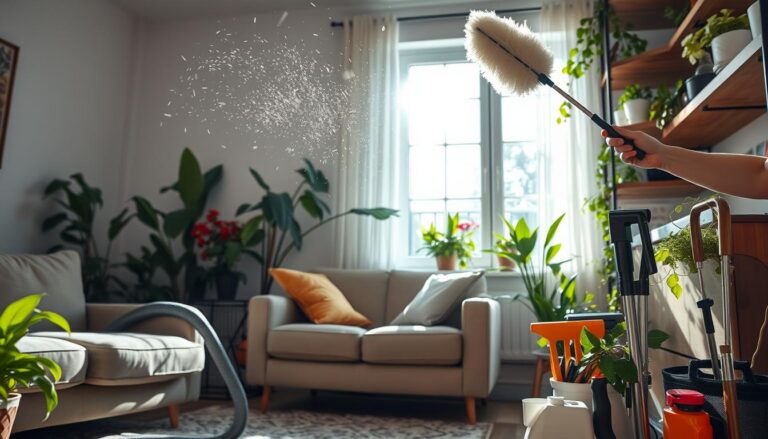
Feather dusters might seem old-fashioned, but high-quality ones made from ostrich or goose feathers pick up dust efficiently. For hard-to-reach places, use an extendable duster to clean ceiling fans and high shelves.
Another great option is electrostatic dusting tools. These tools attract and hold dust particles with static electricity, reducing airborne dust. You can also try dusting sprays that prevent dust from settling back on surfaces.
The Right Order for Dusting
The order in which you dust can make a big difference. Start by dusting the highest surfaces first, like ceiling fans and high shelves.
Then, move to lower surfaces such as countertops and furniture. This way, any dust dislodged from above will be cleaned up later.
Next, focus on electronics, as they can gather a lot of dust. Use a damp microfiber cloth to avoid static buildup.
Finally, clean baseboards and floors to catch any dust that fell from higher surfaces. This orderly approach will help you minimize dust and keep your home cleaner over time.
Floor Care and Maintenance Tips
To keep your floor looking great, understand the floor care tips for each flooring type. Hardwood, tile, and carpet all need different care. Correct cleaning methods can greatly extend the life of your floors.
Best Practices for Different Flooring Types
Each flooring material requires a special approach to maintain its look and durability. Here are some tailored maintenance for various flooring types:
- Hardwood Floors: Sweep regularly to remove dust and dirt. Use a recommended hardwood floor cleaner, avoiding excess water that can cause damage.
- Tile Floors: Sweep and vacuum often. Clean tiled areas and grout lines with mild detergent or a tile cleaner. Never use harsh chemicals that can erode the surface.
- Carpet Floors: Vacuum carpets at least once a week. Deep clean with a carpet cleaner regularly to lift dirt and refresh fibers.
Tips for Keeping Carpets Clean
Carpets attract dust, dirt, and stains easily. Use these effective carpet cleaning tips to keep them fresh:
- Immediate Stain Treatment: Blot spills right away with a clean cloth to prevent stains from setting. Rubbing can push the stain in deeper.
- Regular Vacuuming: Vacuum weekly, especially in high-traffic areas. A vacuum with strong suction and a HEPA filter works best.
- Deep Cleaning: Get professional deep cleaning or rent a carpet cleaner every 6 to 12 months. This removes dirt and allergens from deep in the carpet.
Follow these floor care tips to keep your flooring looking great. Proper care enhances your home’s beauty and comfort.
Window Cleaning Made Easy
Clean windows can enhance your home’s look by letting more natural light into your space. With the right tips and tools, achieving spotless windows is easier than ever. Let’s explore what you need for perfect windows.
Tools for Spotless Windows
Choosing proper tools is key to getting the best results when cleaning windows. A high-quality squeegee gives you a streak-free finish. Use microfiber cloths for effective dust removal and a strong bucket for your cleaning solution.
Professionals often suggest a window scrubber for tough grime. A telescopic pole can help you reach higher windows safely.
The Best Times to Clean Windows
Time selection is crucial for effective window cleaning. The best times to clean are on cloudy days or early mornings and late afternoons. This timing minimizes direct sunlight, which can dry your cleaning solution too fast and cause streaks.
Avoid cleaning on windy days, as dust can stick to wet surfaces quickly.
Seasonal Cleaning Tips
To keep your home comfortable, adopt seasonal cleaning tips. This helps manage tasks so your home stays clean throughout the year. Following a structured method can refresh your living space and prepare it for changing weather.
Spring Cleaning Checklist
A comprehensive spring cleaning checklist is great for rejuvenating your home after winter. Start indoors by focusing on windows, screens, and dusting high places. Clean the kitchen by checking expiry dates and vacuuming refrigerator coils.
Don’t forget to wash curtains and blinds. Outside, make sure the gutters are clean. Consider power washing patios, decks, or walls for a full refresh.
Preparing Your Home for Winter
For winter preparation, focus on cleaning and preventive measures. Clean touchpoints like switches, door handles, and remotes. Organize and sanitize junk drawers, dust under furniture, and polish wood surfaces.
By following these seasonal cleaning tips, you can maintain your home easily. This saves time and keeps dirt from settling in. These practices also help your appliances and fixtures last longer, creating a welcoming, efficient home.
Cleaning for Allergies
If you suffer from allergies, a tailored cleaning approach is important. Effective solutions can reduce allergens and create a healthier home. The next sections will explore dust mite solutions and allergen-free cleaning products.
Dust Mite Solutions
Dust mites are common allergens found in many homes. Regular cleaning must include ways to combat these pests. Here are some effective dust mite solutions:
- Washing bedding weekly: Use hot water to kill dust mites in sheets and pillowcases.
- Using allergen-proof covers: Protect mattresses and pillows with covers to block dust mites.
- Maintaining low humidity levels: Dust mites prefer humid places, so a dehumidifier can help keep humidity below 50%.
Choosing Allergen-Free Products
It is vital to use allergen-free cleaning products if you have allergies. These products reduce exposure to harmful chemicals and other triggers. Below is a comparison table of common allergen-free cleaning products:
| Product | Brand | Key Features |
|---|---|---|
| Natural All-purpose Cleaner | Seventh Generation | Plant-based ingredients, free from synthetic fragrances |
| Hypoallergenic Laundry Detergent | all® free clear | Free from dyes and perfumes, recommended by dermatologists |
| Eucalyptus Bathroom Cleaner | Aunt Fannie’s | Powered by essential oils, non-toxic formula |
These practices and products help create a healthier environment for people with allergies. By using dust mite solutions and allergen-free products, you can enhance indoor air quality and overall well-being.
Utilizing Professional Cleaning Services
Engaging professional cleaning services can change how you keep your home clean. This is especially true during busy times or life changes. These services save time and improve cleanliness, making them a popular choice for many households.
When to Consider Hiring Help
Knowing when to hire cleaning help depends on many factors. Things like tight schedules, events, or physical limits can make a difference. For example, getting ready for holidays or moving to a new home may require extra help.
Welcoming a new family member also creates a need for assistance with cleaning tasks.
Costs and Benefits of Professional Services
It’s crucial to understand the costs and benefits of professional cleaning. The price of hiring help varies based on cleaning needs and frequency. However, the benefits usually outweigh the costs.
Professionals deliver high-quality results using advanced tools and their expertise. This saves time and helps with long-term home maintenance. A clean home contributes to a healthier living environment.