
The average American household stores around 62 toxic chemicals in cleaning products. The Environmental Protection Agency reports that many conventional cleaners release harmful compounds. These chemicals degrade indoor air quality and affect families seeking safer alternatives.
Switching to homemade cleaning products offers a practical path toward a cleaner living space. Simple pantry staples like vinegar, baking soda, and lemon juice work effectively. They clean just as well as their chemical-filled counterparts.
This guide walks homeowners through creating their own cleaning solutions. Readers will discover recipes tailored for kitchens, bathrooms, floors, and laundry rooms. Each recipe uses ingredients already sitting in most kitchens.
The approach reduces both chemical exposure and household expenses. Families can protect their health while maintaining a spotless home. These methods have been passed down through generations.
Building a collection of homemade cleaning products takes just minutes of preparation. No special skills or advanced chemistry knowledge are required. Most recipes need only basic mixing techniques.
Key Takeaways
- Conventional cleaners contain volatile organic compounds that harm indoor air quality and family health
- Homemade cleaning products use affordable pantry staples like vinegar, baking soda, and lemon juice
- Simple recipes deliver professional-level cleaning results for every room in the house
- Creating your own solutions reduces chemical exposure and household spending
- Most recipes take just minutes to prepare with basic mixing techniques
- Natural ingredients are safe for children, pets, and sensitive skin types
Benefits of Switching to Natural Cleaning Solutions
Switching from commercial cleaners to natural solutions brings real benefits to homes and families. These alternatives work just as well while protecting people and pets. Understanding the advantages helps families make informed choices.
The shift toward safer cleaning starts with recognizing what traditional products contain. Many store-bought cleaners release harmful chemicals into air and water systems. Natural cleaning solutions maintain a spotless home without these risks.

Health Advantages of Non-Toxic Living
Harsh chemical cleaners can trigger breathing problems and skin irritation. The American Lung Association points out that indoor air quality matters for respiratory health. Children and pets face the greatest risks from toxic fumes.
Switching to safer alternatives reduces these health dangers significantly. Families report fewer headaches and breathing issues after making the change. Non-toxic ingredients protect vulnerable family members while keeping surfaces clean.
- Reduced respiratory irritation from harsh synthetic fragrances
- Lower risk of skin reactions and allergies
- Better air quality inside homes
- Safer environment for children and pets
Environmental Impact of Reducing Chemical Waste
Chemical cleaners drain into water systems and harm aquatic life. Biodegradable ingredients break down safely without polluting local water supplies. This change protects entire communities and ecosystems.
Every household that switches helps reduce toxic runoff entering rivers and lakes. These small changes add up to significant environmental protection. Families become part of a sustainable solution through earth-friendly products.
- Prevents toxic chemicals from entering water systems
- Protects aquatic ecosystems and wildlife
- Reduces plastic waste from packaging
- Supports sustainable manufacturing practices
Essential Ingredients for Your Cleaning Kit
Building a basic cleaning kit does not require expensive or complex products. Creating homemade cleaning agents at home saves money. It also keeps harmful chemicals away from families and pets.
The foundation of any DIY cleaning system starts with just a few simple ingredients. These ingredients work together to tackle dirt, grime, and stains throughout the home.
The best homemade cleaning agents begin with three core items. These staple ingredients are affordable, safe, and incredibly versatile for use in any room.
Core Ingredients You Need
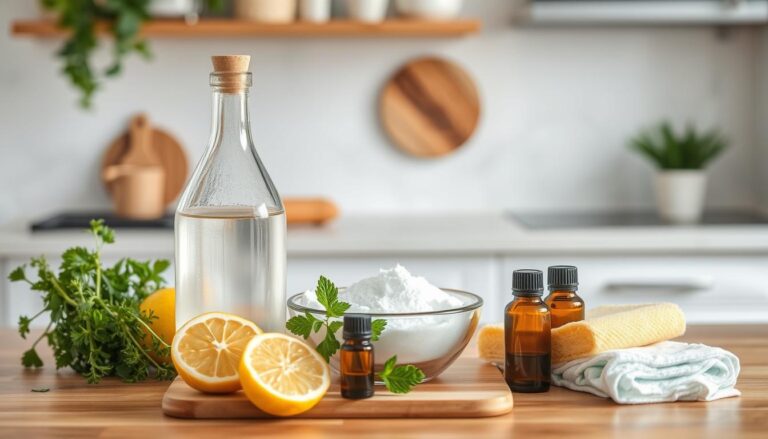
Every cleaning kit should include these essential items:
- Distilled white vinegar – Cuts through grease and mineral deposits with natural acidity
- Baking soda – Provides gentle abrasive action and odor elimination
- Castile soap – A plant-based cleaner that breaks down dirt without toxins
Storage and Preparation Tips
Proper storage matters when preparing homemade cleaning agents. Glass spray bottles work best because they prevent the breakdown of essential oils. Plastic containers can degrade when exposed to acidic solutions like vinegar.
Having these supplies ready means families can address spills and messes immediately. A well-stocked cleaning kit keeps homes sanitary. It also supports a healthier household environment for everyone.
Homemade cleaning products for the Kitchen
The kitchen deserves special attention for cleanliness. This space handles food preparation daily. It’s one of the most important areas to keep sanitized and grease-free.
Homemade cleaning products work wonderfully in kitchens. They tackle tough grime without leaving harmful chemical residues. These natural solutions keep surfaces safe where meals are prepared.
Creating your own solutions saves money and keeps your family safe. Most ingredients sit in your pantry or under your sink already. These natural cleaners work just as well as commercial brands for everyday kitchen tasks.
Degreasing Countertops Naturally
Greasy countertops need gentle yet effective treatment. A simple mixture works best for most surfaces:
- Warm water combined with one tablespoon of dish soap
- Safe for granite and laminate without damaging sealants
- Wipe down in circular motions for best results
This basic solution removes cooking oils and splatters quickly. For stubborn buildup, let the mixture sit for a few minutes before wiping. Always check your specific countertop material first to ensure compatibility.
Deep Cleaning Sinks and Faucets
Stainless steel sinks often show mineral deposits and water spots. A paste made from baking soda and water cleans these surfaces effectively without scratching.
- Mix three parts baking soda with one part water
- Apply paste directly to sink surfaces
- Scrub gently with a soft cloth or sponge
- Rinse thoroughly with clean water
“A clean kitchen is the foundation of food safety and healthy living.”
This approach eliminates mineral buildup while keeping your sink hygienic. These simple steps are worth the effort for your family’s health.
Safety Precautions When Mixing Ingredients
Homemade cleaning solutions offer many benefits, but safety must come first. Understanding which ingredients work together prevents dangerous chemical reactions. Many household items seem harmless alone, yet combining them creates toxic fumes or explosions.
The Centers for Disease Control and Prevention warns that certain combinations pose serious health risks. One critical rule involves keeping acids and bases separate. Mixing bleach with vinegar, ammonia, or hydrogen peroxide releases poisonous chlorine gas.
This colorless gas causes breathing problems, chest pain, and watery eyes within minutes.
Proper labeling prevents accidental mixing in busy households. Every container should display its contents clearly and boldly. Family members, roommates, and babysitters need to know exactly what each bottle contains.
Follow these essential safety guidelines when preparing your homemade solutions:
- Work in well-ventilated areas to avoid inhaling fumes
- Wear rubber gloves to protect your skin from irritation
- Never combine more than two ingredients unless a trusted recipe specifies otherwise
- Store all mixtures in clearly labeled containers away from children and pets
- Keep a written list of what each container holds
- Read labels on commercial products before using them near your homemade solutions
Building a safe cleaning routine takes planning. Start by listing every ingredient you use. Document which items never mix together.
Effective Bathroom Scrubbing Techniques
Bathrooms present unique cleaning challenges because they stay wet and humid. Soap scum, hard water stains, and mineral deposits build up quickly on shower walls. People can tackle these problems using homemade cleaning solutions from items already at home.
Natural acids like lemon juice and white vinegar work well for breaking down stubborn bathroom grime. These options skip harsh chemicals while delivering powerful results.
Understanding how different surfaces respond to natural cleaning agents leads to better results. Acidic solutions need time to sit on problem areas and dissolve tough buildup. A stiff-bristled brush then removes the loosened dirt with minimal effort.
Regular cleaning prevents mold and mildew from taking hold in damp shower environments.
Removing Soap Scum from Shower Walls
Soap scum sticks to glass and tile surfaces, making bathrooms look dingy. The white, cloudy film forms when soap mixes with hard water minerals. A 50-50 mixture of white vinegar and water creates an effective spray.
- Spray the solution generously on affected areas
- Wait 10 to 15 minutes for the acid to work
- Scrub with a stiff brush using circular motions
- Rinse thoroughly with clean water
- Dry with a microfiber cloth to prevent streaks
For stubborn soap scum, make a paste using baking soda and vinegar. This thicker formula clings to vertical surfaces better than liquid solutions.
Sanitizing Toilets with Natural Acids
Toilet bowls harbor bacteria and need regular sanitization. White vinegar and lemon juice both contain acids powerful enough to kill germs. Pour one cup of white vinegar directly into the bowl.
Let it sit for 30 minutes. The acid kills bacteria while the bowl soaks.
| Natural Ingredient | Strength Level | Contact Time | Best Use |
|---|---|---|---|
| White Vinegar | Moderate | 30 minutes | Regular toilets |
| Lemon Juice | Moderate | 15-20 minutes | Stubborn stains |
| Baking Soda Paste | Gentle | 10 minutes | Porcelain care |
| Vinegar and Baking Soda Mix | Strong | 20 minutes | Heavy buildup |
After soaking, scrub under the rim and around the waterline with a toilet brush. Chemical action and physical scrubbing work together to remove stains and odors. This approach maintains bathroom hygiene while keeping the space safe for families.
DIY cleaning supplies for Sparkling Floors
Keeping floors clean and shiny does not require expensive commercial products. Creating DIY cleaning supplies at home offers an affordable way to maintain hardwood, tile, and laminate flooring. These natural solutions protect floor finishes while removing dirt and grime effectively.
Most floor-cleaning recipes involve simple pantry staples. Vinegar acts as a natural disinfectant and deodorizer. Baking soda provides gentle abrasive power for stubborn spots.
Water serves as the base for nearly every solution. These three ingredients cost just a few dollars but deliver impressive results. They work across different floor types.
One effective formula combines one-quarter cup of vinegar with one gallon of warm water. This mixture works well on most sealed flooring surfaces. The solution cuts through dirt without damaging protective coatings.
Users should always employ a damp mop rather than a soaking wet one. Excess moisture can seep into wood fibers and cause warping. It may also lead to discoloration over time.
Regular maintenance prevents buildup and keeps floors looking polished. Sweeping before mopping removes loose dust and debris. This two-step approach works better than mopping alone.
Creating Your Basic Floor Cleaner
Making a simple floor solution takes just minutes. Users gather vinegar, water, and a mop bucket. Mixing the ingredients creates an instant cleaner ready for use.
- Measure one-quarter cup white vinegar
- Fill a bucket with one gallon of warm water
- Mix vinegar into water thoroughly
- Dampen mop in solution
- Wring out excess liquid before mopping
Best Practices for Different Floor Types
Different flooring materials respond best to specific cleaning approaches. The following guide helps users select appropriate methods for their homes.
| Floor Type | Solution | Mop Dampness | Frequency |
|---|---|---|---|
| Hardwood | Vinegar and water (1:4 ratio) | Barely damp | Weekly |
| Tile | Vinegar and water (1:4 ratio) | Damp | Twice weekly |
| Laminate | Vinegar and water (1:8 ratio) | Barely damp | Weekly |
| Vinyl | Vinegar and water (1:4 ratio) | Damp | Twice weekly |
“The best cleaning approach combines prevention with regular maintenance. Placing doormats at entrances reduces dirt tracking indoors.”
Homeowners save money by creating DIY cleaning supplies instead of purchasing brand-name products. Natural ingredients cost less while delivering comparable or superior results. This approach benefits both household budgets and the environment.
Natural Solutions for Glass and Mirrors
Glass and mirrors can transform any room when they sparkle and shine. Streaks, smudges, and stubborn mineral deposits cloud the surface. Natural cleaning solutions offer a simple path to crystal-clear results.
The most effective method uses basic pantry ingredients that people already have at home. This approach saves money and reduces chemical exposure in living spaces. Clear glass deserves a clear cleaning strategy that produces professional-looking results.
Achieving Streak-Free Surfaces
Creating a streak-free finish starts with the right mixture. Equal parts white vinegar and water make an excellent glass cleaner. This combination breaks down film buildup that causes cloudy appearances on windows and mirrors.
The cloth choice matters as much as the cleaning solution. Microfiber cloths prevent lint from staying behind on glass surfaces. Paper towels and standard cotton rags leave fibers that ruin the final appearance.
- Mix one part white vinegar with one part water in a spray bottle
- Spray the mixture onto the glass surface
- Use a microfiber cloth in circular motions
- Buff the surface with a dry microfiber cloth for extra shine
Removing Hard Water Spots
Hard water leaves mineral deposits on glass that regular cleaning cannot remove. These spots come from calcium and magnesium buildup in tap water. Lemon juice contains natural acids that break down these mineral bonds effectively.
For stubborn spots, apply concentrated lemon juice directly to the affected area. Let it sit for several minutes to work on the deposits. The citric acid penetrates the mineral layer and loosens it from the glass.
Wipe away the juice with a damp cloth. Then finish with the vinegar solution for a flawless surface.
| Hard Water Problem | Natural Solution | Application Time | Best Results |
|---|---|---|---|
| Mineral spotting | Lemon juice | 5-10 minutes | Concentrated application |
| General cloudiness | Vinegar and water mixture | Immediate | 50/50 ratio |
| Film buildup | Vinegar solution | Immediate | With microfiber cloth |
| Stubborn deposits | Baking soda paste | 10-15 minutes | Gentle circular motion |
These natural cleaning solutions deliver results that rival expensive products. The vinegar mixture handles everyday cleaning, while lemon juice tackles tough mineral spots. Together, they create a complete glass-cleaning system using ingredients from the kitchen.
Maintaining a Fresh Living Room Environment
The living room serves as the heart of most homes. Families gather here, and guests spend quality time in this space. Dust and allergens build up faster than people realize.
A clean living room creates a healthier atmosphere for everyone. Regular maintenance keeps the room feeling fresh and inviting.
Creating a cleaning routine using do-it-yourself cleaning solutions works well for upkeep. A simple spray made from water and essential oils refreshes upholstery and curtains. Try lavender or lemon oils between deep cleanings.
Vacuuming plays a crucial role in maintaining air quality. Use a vacuum with a HEPA filter to capture tiny particles. HEPA filters trap 99.97% of dust and allergens that standard models miss.
Key Steps for a Cleaner Living Room
- Declutter surfaces to make dusting easier and faster
- Vacuum upholstered furniture weekly using an upholstery attachment
- Wipe baseboards and ceiling corners monthly to remove dust buildup
- Spray light mist of water and essential oils on curtains for freshness
- Clean light fixtures and lampshades regularly
- Air out cushions and throw pillows in sunlight when possible
Keeping surfaces clear of clutter makes cleaning tasks simpler and faster. Open spaces allow air to circulate better throughout the room. Regular attention to these details transforms your living room into a welcoming space.
Eco-friendly household cleaners for Laundry
Doing laundry at home does not require harsh chemical formulas to achieve clean, fresh clothes. Eco-friendly household cleaners offer powerful cleaning action while protecting both fabric quality and the environment. Natural ingredients work together to remove stains, brighten colors, and soften fibers without toxins.
Families can build an effective laundry routine using simple pantry staples that deliver impressive results.
Brightening Whites Without Bleach
White fabrics deserve special attention to maintain their brightness and appearance. Baking soda serves as a gentle yet effective brightening agent that boosts cleaning power. Adding half a cup to the wash cycle alongside regular detergent lifts dingy tones naturally.
This method works especially well for cotton towels, bed linens, and everyday white clothing.
For stubborn yellowing or tough stains, hydrogen peroxide provides a mild alternative to traditional bleach products. This ingredient tackles discoloration safely and kills bacteria that cause odors. Many households already keep hydrogen peroxide on hand for first aid purposes.
Softening Fabrics Using Vinegar
Vinegar transforms laundry care by working as a natural fabric softener that costs just pennies per load. According to resources on clean green homemade cleaners, vinegar removes lingering odors from gym clothes and towels. Simply pour half a cup of white vinegar into the rinse cycle or fabric softener dispenser.
The benefits of vinegar extend beyond softening:
- Eliminates musty smells from stored linens
- Reduces static cling naturally
- Brightens colors and prevents fading
- Removes detergent residue buildup
These natural ingredients respect both delicate fabrics and the planet. They make laundry day more sustainable without sacrificing cleanliness or freshness.
Proper Storage for Your Mixtures
Keeping homemade cleaning agents fresh requires smart storage practices. The way you store natural cleaning mixtures impacts their effectiveness over time. Poor storage conditions damage ingredients and reduce cleaning power.
Finding the right storage spot matters more than most people think. A cool, dark cabinet works best for maintaining mixture strength. Direct sunlight breaks down essential oils and natural acids quickly.
Glass containers offer the best protection for storage needs. Plastic bottles can release harmful chemicals into mixtures over time. Always choose airtight glass jars or bottles with secure lids.
Best Storage Conditions
- Keep mixtures in a cool location away from direct sunlight
- Use glass containers with tight-fitting lids
- Store in a dedicated cabinet separate from food items
- Place containers on stable shelves to prevent spills
- Keep all products out of reach of children and pets
Container Guidelines
| Container Type | Best For | Shelf Life |
|---|---|---|
| Glass Jars | Long-term storage | 6-12 months |
| Glass Bottles | Spray solutions | 3-6 months |
| Plastic Containers | Short-term only | 1-3 months |
Labeling containers prevents dangerous mixing mistakes. Write the mixture name and creation date on each bottle. This simple step keeps families safe and helps track replacement needs.
Non-toxic cleaning recipes for Pet Areas
Pet owners know how important it is to keep homes clean while protecting furry family members. Pets spend lots of time on floors, furniture, and around their belongings. Safe cleaning methods are essential for their health and happiness.
Non-toxic cleaning recipes provide effective solutions that eliminate germs and odors without harsh chemicals. These natural approaches keep pets healthy while maintaining a spotless home environment.
Creating a pet-safe cleaning routine requires careful attention to ingredients and application methods. Many household pets are sensitive to strong fumes and chemical residues. Using gentle, natural alternatives ensures your home stays hygienic for every family member.
Neutralizing Odors on Upholstery
Pet accidents and odors frequently affect furniture and carpets throughout the home. Baking soda serves as an excellent natural deodorizer that safely neutralizes unpleasant smells. This ingredient works by absorbing odor molecules rather than masking them with artificial fragrances.
To freshen upholstered surfaces:
- Sprinkle baking soda generously over affected areas
- Allow the powder to sit for 15-20 minutes
- Vacuum thoroughly using a pet-hair attachment
- Repeat as needed for stubborn odors
For deeper cleaning, mix baking soda with a few drops of lavender essential oil. This combination enhances the deodorizing effect while adding a fresh scent. Pets generally tolerate this mixture well.
Safe Sanitization for Pet Bowls
Pet food and water bowls require regular sanitization to prevent bacterial growth. Simple hot water washing effectively removes food particles and bacteria that accumulate on bowl surfaces.
| Cleaning Method | Ingredients Needed | Time Required | Effectiveness |
|---|---|---|---|
| Hot Water Rinse | Hot tap water only | 5 minutes | Daily maintenance |
| Mild Dish Soap Wash | Mild dish soap and hot water | 10 minutes | Standard cleaning |
| Vinegar Solution | Equal parts white vinegar and water | 15 minutes | Deep sanitization |
| Baking Soda Scrub | Baking soda paste with water | 12 minutes | Stubborn stain removal |
White vinegar acts as a natural disinfectant when mixed with water in equal proportions. Soak pet bowls in this solution for several minutes. Then rinse thoroughly with clean water.
This method eliminates bacteria without leaving toxic residues that could harm pets. Your furry friends stay safe during their next meal.
Pets deserve living spaces that are both clean and safe. These gentle approaches to pet area maintenance show how effective non-toxic solutions can be. They prioritize animal health and family wellness.
Sustainable Habits for a Greener Home
Building a sustainable home goes beyond buying eco-friendly household cleaners. Real change happens through lasting habits that reduce waste and protect the environment. Small, everyday choices create meaningful differences for the planet.
One easy way to become more sustainable is reusing containers and spray bottles. People can refill empty bottles with homemade cleaning solutions instead of tossing them. This practice keeps plastic out of landfills and saves money.
Buying cleaning ingredients in bulk is another smart strategy. Purchasing baking soda, vinegar, and other staples in large quantities reduces packaging waste significantly. This approach works well for building a more eco-conscious lifestyle.
Key Sustainable Actions for Your Home
- Refill spray bottles instead of buying new ones
- Purchase bulk ingredients to minimize plastic packaging
- Compost organic cleaning waste when possible
- Share homemade cleaning recipes with family and friends
- Track your waste reduction progress monthly
Reducing consumption at the source is the most effective way to lower environmental impact. Every person who switches to sustainable cleaning methods sends less trash to landfills. These consistent, small actions create powerful results for a healthier home and planet.
Green cleaning products for Outdoor Spaces
Outdoor cleaning needs special care because rain carries solutions into soil and plants. Green cleaning products work great for patios, decks, and surfaces without harming nature. These natural solutions keep outdoor areas fresh while protecting the ecosystem.
Eco-friendly outdoor cleaning extends furniture life and improves your home’s appearance. Kitchen ingredients create effective cleaners that match commercial options.
Cleaning Patio Furniture Safely
Patio furniture faces constant dirt, dust, and weather damage. Water and mild dish soap work well on plastic, metal, and wood. This gentle method prevents damage while removing buildup.
- Mix one tablespoon of mild soap with two gallons of warm water
- Scrub furniture with a soft brush or cloth
- Rinse thoroughly with clean water
- Allow furniture to air dry completely
Wooden furniture needs extra care. Vinegar solutions restore shine without causing discoloration or finish damage.
Removing Grime from Exterior Windows
Pollen, dust, and hard water stains build up on outdoor windows. A simple vinegar solution removes these stubborn marks effectively. This natural cleaner dissolves deposits and dirt without streaks.
| Ingredient | Amount | Purpose |
|---|---|---|
| White vinegar | One cup | Dissolves grime and mineral deposits |
| Water | One quart | Dilutes solution safely |
| Dish soap | A few drops | Enhances cleaning power |
Spray the mixture on windows and wipe with microfiber cloth or newspaper. Regular outdoor cleaning maintains your home’s look and extends furniture life.
Troubleshooting Common Cleaning Challenges
Stubborn stains and tough grime can appear even with the best DIY cleaning supplies. A single application of natural cleaner may not remove all dirt. Learning to adapt your cleaning methods helps solve these persistent problems.
Stains that won’t disappear need a different approach. Increasing the dwell time makes a real difference in cleaning results. Let the cleaning solution sit on the surface longer for better results.
Natural acids in vinegar and lemon juice need time to work. These ingredients break down built-up residue more effectively with patience. Leave the mixture on dirty areas for 10 to 15 minutes.
You can also adjust the concentration of your cleaning ingredients. A stronger mixture with more baking soda or vinegar tackles heavier soils. Always test stronger solutions on a small, hidden spot first.
This testing step prevents damage to delicate surfaces. Marble countertops and antique wood furniture need extra care. A quick test saves you from costly mistakes.
Quick Solutions for Persistent Problems
- Double-check the ratio of ingredients in your recipe
- Allow solutions to work for extended periods on tough stains
- Use a soft brush to gently agitate the area
- Repeat applications on heavily soiled surfaces
- Test new mixtures on inconspicuous areas first
Patience combined with proper technique conquers most household cleaning challenges. Natural cleaners work best when you understand their properties. Adapt your strategies to match specific cleaning needs for success.
Conclusion
Making the switch to non-toxic cleaning recipes offers real benefits for your family and home. You now have the knowledge to clean every room safely without harsh chemicals. These natural solutions work just as well as store-bought products.
Best of all, they cost less money and protect everyone’s health in your household.
Starting your journey with non-toxic cleaning recipes does not need to feel overwhelming. Pick one room to begin with and replace your old cleaning supplies step by step. You might start in the kitchen or bathroom.
Small changes lead to bigger results over time. Each room you tackle brings you closer to a cleaner, safer living space.
By using these simple, natural ingredients, you create a safer home for your family. Your choice to clean sustainably also helps protect the environment. Fewer chemicals in your home means less pollution in our water systems.
This lifestyle shift builds a better world for future generations. Your commitment to natural cleaning practices makes a real difference.